Prepare the parking arrangement
For a planned extended pause, follow the vehicle and tyre manufacturer instructions. A suitable clean location and protection from adverse conditions are more useful than improvised measures. Do not raise the car on unsuitable supports merely to unload the tyres. Such work needs appropriate equipment and a prescribed procedure.
Record existing concerns and check the specified pressure before parking. Do not forget a known leak until the following season. If inspection or repair is already due, the unused period may provide time for an orderly workshop visit. That avoids discovering an unresolved job just before the first planned journey.
What can change while parked?
Tyres can lose pressure without being driven. Check the vehicle during extended storage as instructed and whenever visible changes occur. A markedly deflated tyre should not be taken for a quick drive to restore its shape. First establish why pressure is missing and whether damage has resulted.
Long periods stationary can also contribute to temporary or persistent distortion. However, the length of storage alone cannot establish the cause of a vibration. Do not automatically dismiss new disturbance as harmless flat spotting. Other faults remain possible and may require investigation.
Before the first journey
Check pressure under appropriate cold conditions and look for damage, embedded objects and unusual distortion. Include every wheel and any spare. Consider whether the intended use has changed, perhaps through heavier loading or a different season. The set must suit the next journey, not simply the last drive before parking.
If warnings appear or a tyre does not hold pressure, resolve the cause before a long trip. Passing a visual check does not guarantee internal condition. A professional inspection can be particularly useful before returning a vehicle with unknown history to service.
Record the first observations
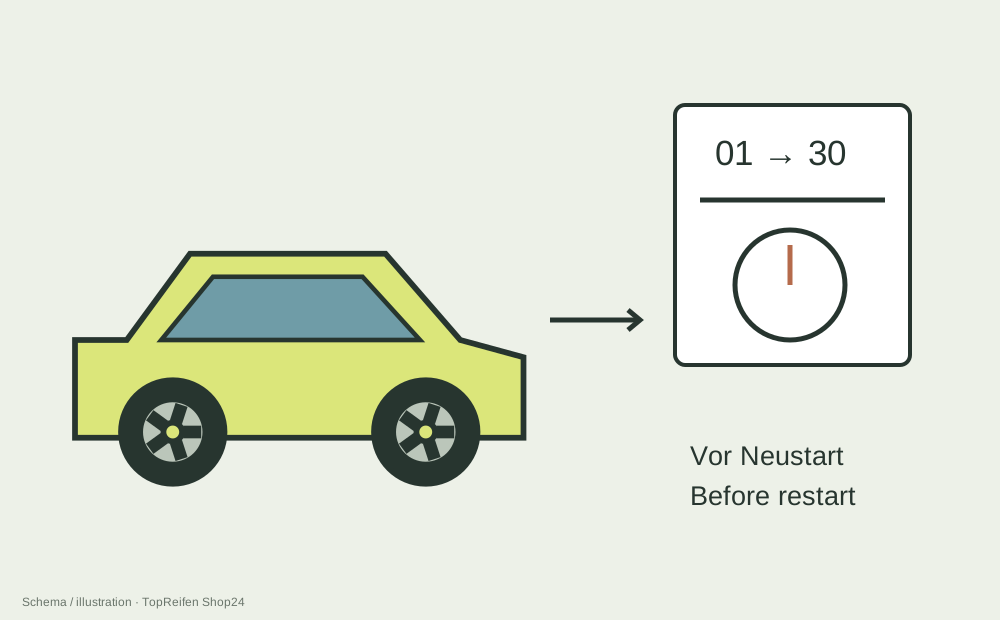
Do not deliberately drive fast to make a disturbance disappear. If behaviour is unusual, stopping safely and seeking assessment matters more. Record when the symptom occurs and whether it changes without undertaking risky experiments. The workshop can then investigate more precisely.
Keep the date, storage duration and checks performed together. For a car used seasonally, this creates a workable routine without needing numerous forms. The important point is that known concerns do not disappear from memory during the pause and carry forward unchecked into the next start. A brief record also helps another driver understand what has already been checked and what still needs attention.