Different sizes may be intentional
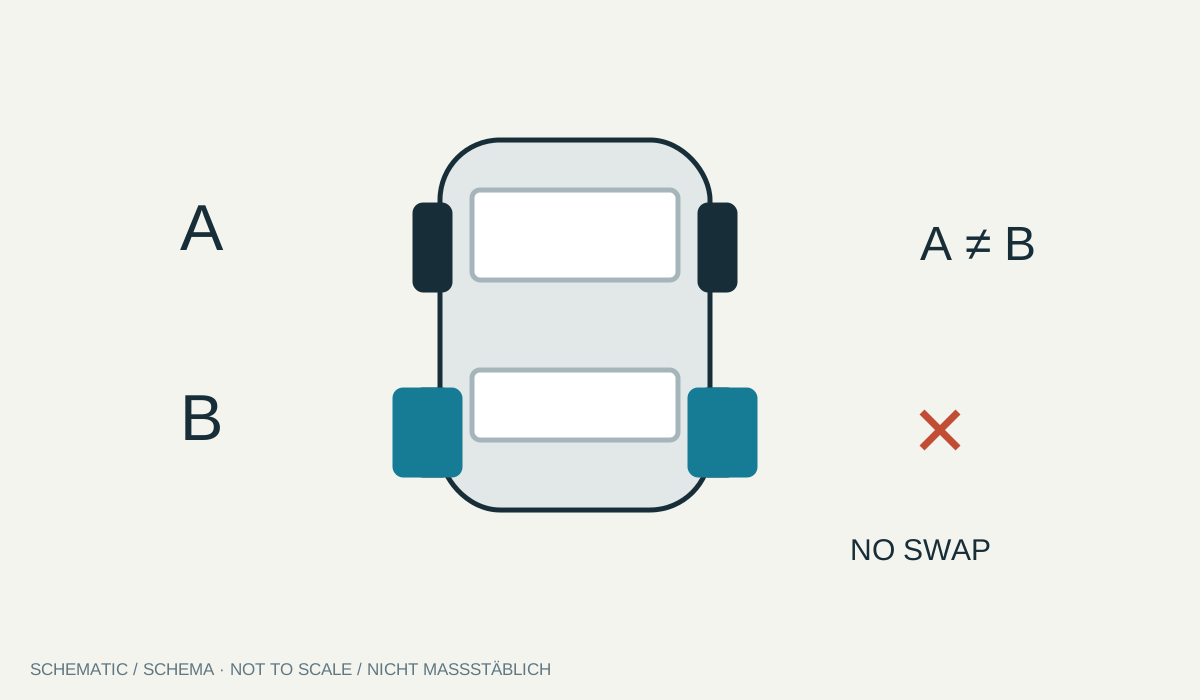
Some vehicles are approved with different tyre or wheel dimensions at the front and rear. This is commonly called staggered fitment. It is not automatically an error or a random mixture. The important point is fitting the specified combination in the correct versions. Visible size differences alone establish neither approval nor unsuitability.
Read both axle entries in the vehicle documents and their notes. Buying four copies of the size visible in one tyre photograph is not sufficient. Identify front and rear explicitly. For complete wheels, include their markings because width or offset can differ as well.
Treat all four products as one set
A tyre model may be available in the front size while the matching rear version is unavailable. Check the complete combination before ordering half of it. Load index, speed rating and any particular vehicle requirements must also match. A shared model name is insufficient if a specification detail differs.
Request an axle-by-axle quotation. Quantity, size and complete rating should appear separately for front and rear. Delivery can then be checked directly against the intended set. A broad description such as four tyres for model X makes it harder to distinguish similar-looking versions in the shipment.
Do not invent a new rolling relationship
Different widths or wheel diameters do not permit arbitrary outside circumferences. The approved combination accounts for the vehicle and its systems. Differences between axles can be especially relevant to certain drivetrains. Do not adopt a home-calculated alternative merely because a circumference calculator shows similar percentages.
Simple geometry using width, aspect ratio and wheel diameter describes nominal dimensions only. Construction and wear affect actual rolling behaviour. Questions about permissible differences or replacing individual tyres belong with the manufacturer or a qualified business. One universal tolerance for every all-wheel-drive car would be misleading.
Plan rotation and replacement separately
Ordinary front-to-rear rotation is not generally available when sizes differ. Left-to-right movement may also conflict with direction of rotation or other instructions. Mark positions for storage and tell the workshop the actual combination. A generic rotation graphic is not a sufficient work instruction here.
If one tyre is damaged, replacement must account for the remaining tyres and manufacturer requirements. Do not ask only for the cheapest single item. A suitable replacement needs consideration within the complete fitment. Records of model, mileage and tread depths help the business make that assessment.
Keep pressures and allocation correct
Cold-pressure targets can differ front to rear. Use the instructions for the particular combination and load. After fitting or a permitted position change, check whether TPMS assignment or initialisation is required. A display with incorrect wheel locations can complicate later checks.
Keep the documents with the set, especially if summer and winter combinations differ. A seasonal swap may use another approved arrangement, but must not be assembled by mixing arbitrary wheels from both sets. Treat each installed set as a complete approved configuration.