Read the method before the ranking
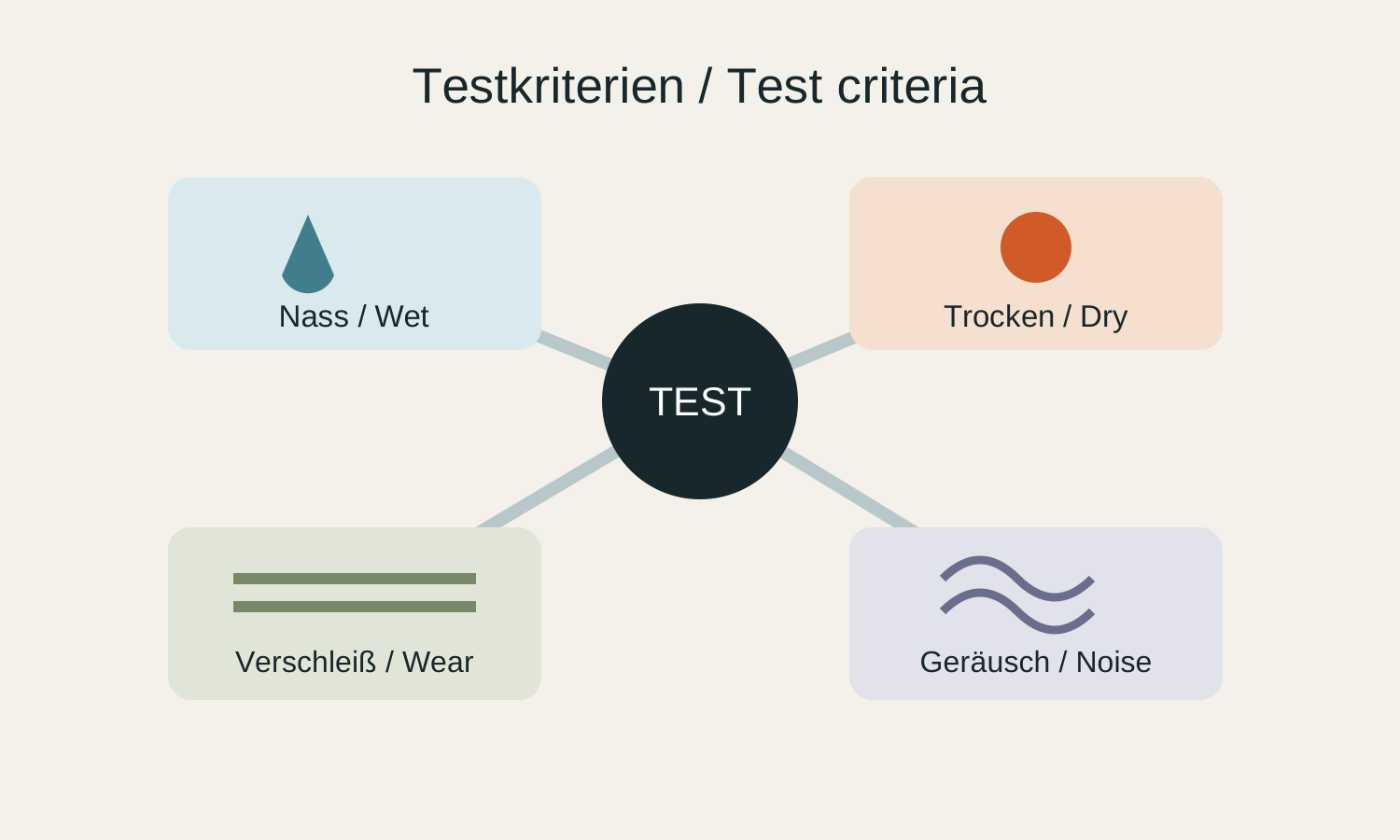
A tyre test combines several observations into an overall judgment. Before choosing first place, read what was assessed and how the result was formed. Some methods cap a grade when a substantial weakness appears. A simple average calculated at home may therefore misrepresent the published assessment.
Establish whether the source is an independent comparison, a manufacturer's presentation or an owner report. Each can contain information, but their evidential value differs. The source should identify the tyres, dimensions and conditions compared. A ranking without those details is harder to interpret.
Your priorities do not create a new official grade
Write down your driving pattern before reading the results. Frequent rain makes wet criteria particularly relevant; high annual mileage adds interest in wear and efficiency. You can make a personal selection on that basis. Do not alter an official grade and then present the new number as though it came from the tester.
A product may be more interesting for your use than the overall winner without making the test wrong. What matters is understanding the differences. Read the explanation of a weakness and consider whether that situation can occur in your driving. Infrequent does not automatically mean unimportant.
Separate measurements, projections and impressions
A measured stopping distance under defined conditions differs from projected mileage or a subjective handling impression. All can be useful, but they are not equally certain predictions for your car. Check how a projection was produced and what limitations are stated.
Consumption and noise also depend on the test setup. The EU label and an independent comparison may not answer exactly the same question. A difference is therefore a reason to understand the methods before treating it as proof of an error.
Why two tests may disagree
Different sizes, vehicles, temperatures and scoring weights can produce different rankings. Compare those foundations first. A newer result is not automatically better for every question if it covers a completely different dimension. Conversely, an older comparison may describe a product generation that has since been replaced.
Look for recurring, well-explained findings and keep contradictions visible. A question to the manufacturer or seller may help where a characteristic remains unclear. Do not demand certainty the evidence cannot provide. Recording uncertainty is better than arbitrarily selecting the more favourable number.
Turn the reading into an order
Narrow the list to a few suitable variants and compare inclusive prices. Check load and speed versions, seasonal markings and possible OE suffixes. Do not let a badge lead to the wrong item. The order description should identify the version clearly enough to check the delivery.
Keep the reasons for selection with the invoice. Next time, you can reconsider whether your driving is still the same and whether a replacement model offers different evidenced characteristics. An old ranking does not need to become a permanent commitment to a brand. It is a record of a decision made with particular information at a particular time.