Identify the technology
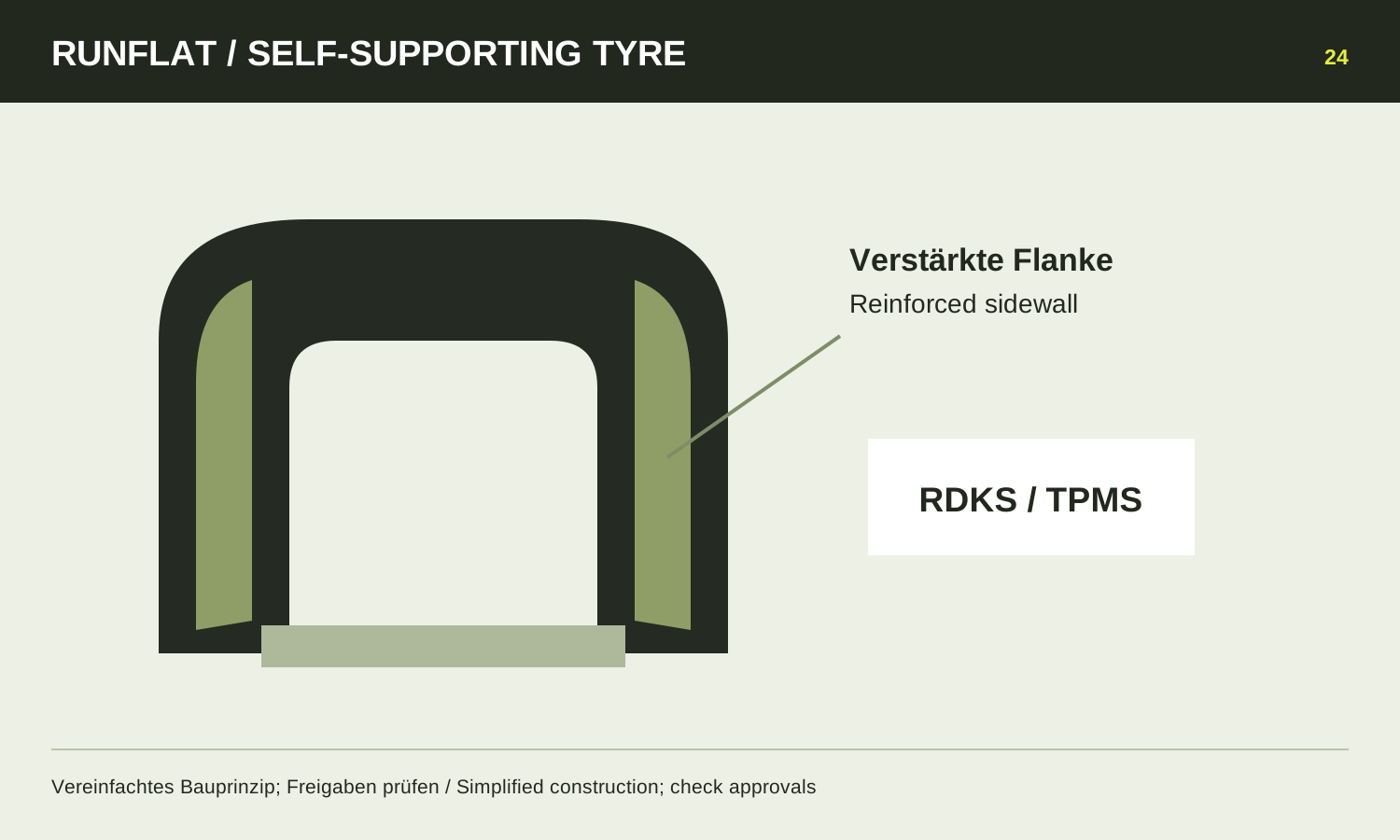
Self-supporting run-flat tyres use reinforced sidewalls to support operation under specified conditions after pressure loss. This differs from an internal sealing layer or liquid emergency sealant. Manufacturers use different names. Establish which technology the actual listing describes before comparing prices.
Run-flat capability does not make a damaged tyre undamaged again. It describes a limited means of continuing under stated conditions. Limits belong to the vehicle and tyre instructions. Do not apply a familiar distance or speed number universally to every product.
Establish compatibility before ordering
A matching nominal size is insufficient for a conversion. Vehicle approval, wheel, monitoring equipment and manufacturer requirements must be considered together. Certain systems require functioning pressure monitoring because pressure loss may be less obvious to the driver than with a conventional tyre. Have the actual combination confirmed.
If the vehicle already uses run-flats, record the complete version. A replacement with a similar name may have a different construction. Ask about the intended combination across all four positions and avoid independently mixing systems.
Changing to conventional tyres is a separate decision
Some drivers consider conventional tyres for cost or comfort. Whether this is possible, and under what conditions, must be established for the vehicle. Also consider the puncture arrangement afterwards. A car without a designed spare-wheel space does not automatically gain a usable spare because run-flats are removed.
Discuss the conversion with a qualified source before purchase and keep a record. Another owner's account using the same model name is insufficient if year, equipment or wheel combination differs. A subjective comfort report is not technical approval.
Follow the instructions after a warning
A pressure-loss warning must not be ignored because the tyre says run-flat. Follow the vehicle instructions, assess the situation and have the tyre inspected. Obvious severe damage or unsafe handling requires a different response from relying on a theoretically available emergency range.
Tell the workshop whether, and how far, the vehicle travelled after the warning. That history may matter to assessment. Repairability or replacement depends on the damage and applicable requirements, not simply on the tyre retaining air after reinflation.
Include fitting and associated costs
Ask whether the fitter can service the particular construction correctly and what associated work is needed. Include possible sensor work when comparing quotations. Retain the documents so the system can be identified clearly after a later puncture.
Run-flat capability can serve a useful purpose in an approved combination. It does not remove regular checks or justify a general promise of finishing every journey after tyre damage. Understand that limit when buying, rather than discovering it at the roadside. Where instructions are missing, obtain them from the vehicle or tyre manufacturer before relying on the system.