What is being measured?
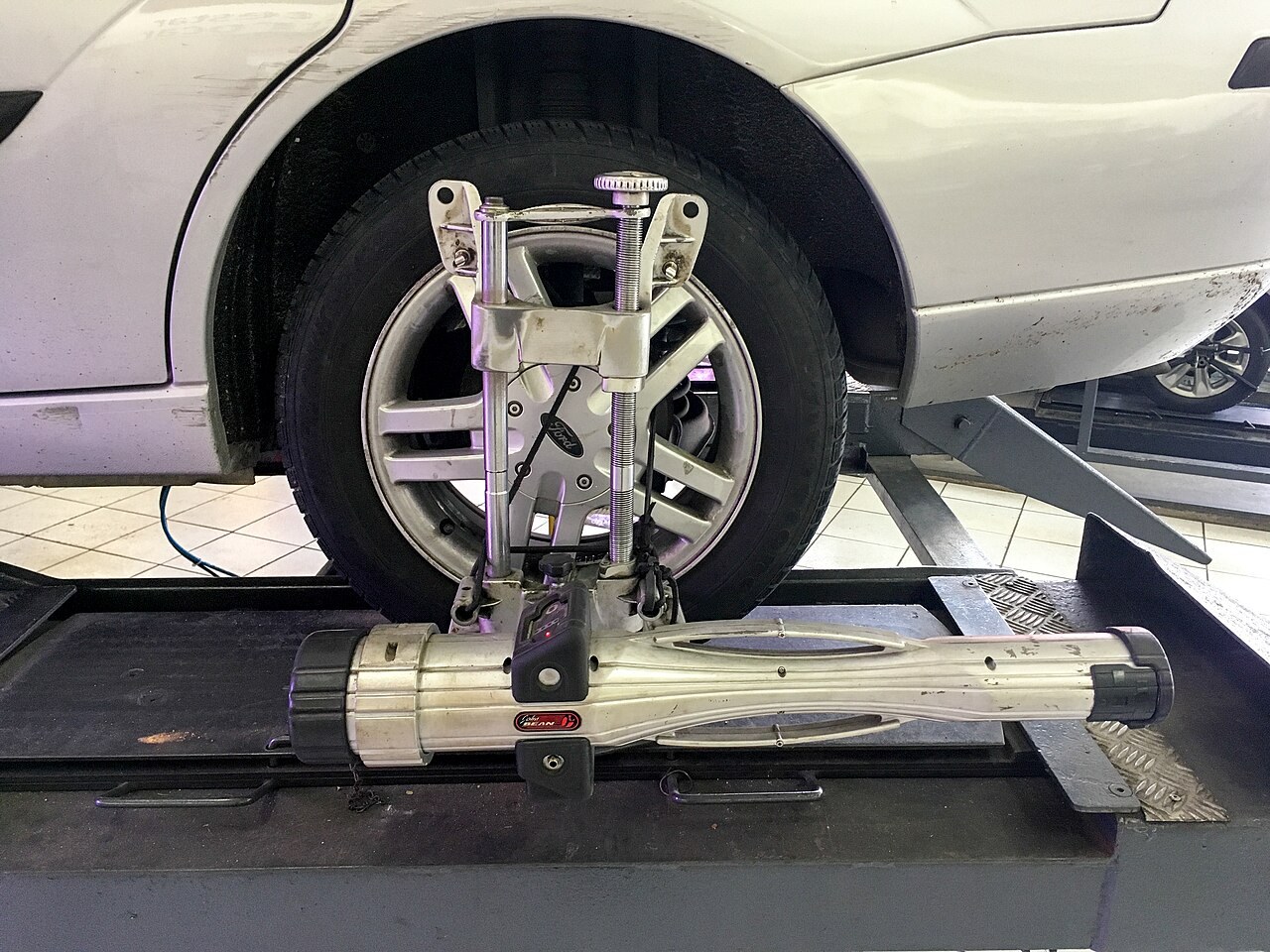
Balancing corrects the distribution of mass around a rotating wheel. Alignment concerns the position of the wheels and the suspension geometry. Toe and camber are among the familiar measurements. Their acceptable values come from the vehicle manufacturer, not simply from the width of the tyres. A wheel that looks upright can still be outside those specifications.
Wear concentrated along an inner shoulder does not prove one particular adjustment is wrong. Inflation, loading, component condition and use may contribute. A photograph helps describe the problem but cannot replace examining the car. Exposed cords, a bulge or obvious damage need prompt professional assessment regardless of when an alignment appointment is available.
Give the workshop a useful account
Record when you first noticed the problem. Was there a substantial pothole impact or contact with a kerb beforehand? Does the car pull in the same direction on different roads, or only on a strongly sloping surface? Mention a crooked steering wheel and unusual wear together if you have observed both. There is no need to undertake a risky test drive to reproduce them.
Ask the workshop to check that the car is ready for adjustment before merely changing settings. Worn or damaged suspension components can prevent a meaningful result. Tyre pressure, vehicle loading and the prescribed measuring procedure also matter. Some vehicles require additional calibration associated with their equipment; the workshop should establish the applicable procedure.
Keep the measurement report
A report showing the readings before and after adjustment explains what changed. If values remain outside specification, ask why and what work remains outstanding. A green screen does not explain whether an already damaged or unevenly worn tyre remains usable.
Adjustment cannot put lost tread back. Discuss the condition of the existing tyres separately. Record the date and odometer reading, and agree when to inspect the wear again. If a newly fitted set develops the same pattern, those records will be more useful than remembering that an alignment was performed at some point. A new set of tyres should not become an expensive experiment that conceals an unresolved suspension problem.