What happens at the contact area
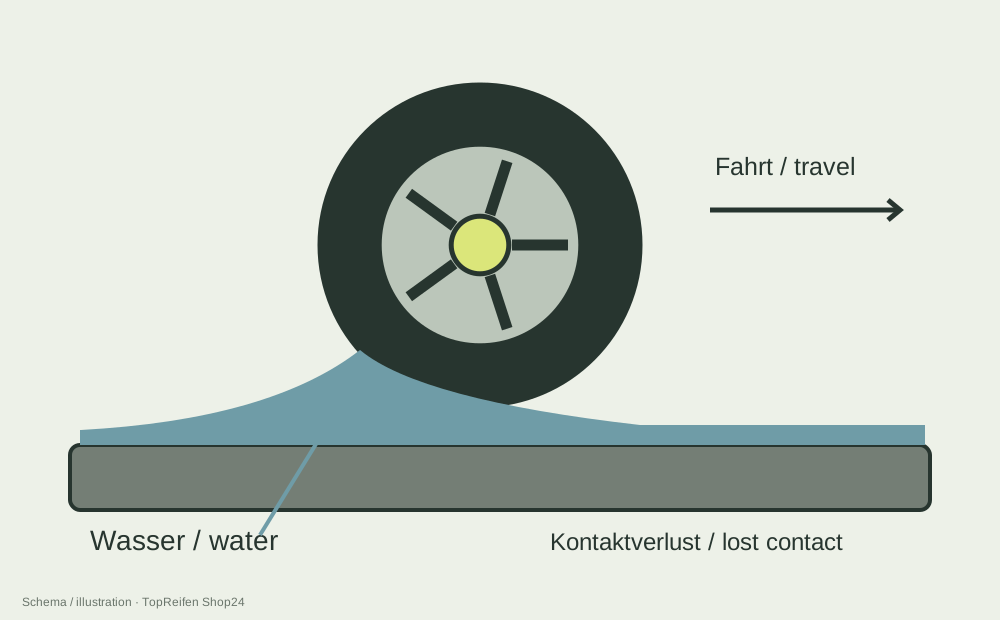
A rolling tyre has to displace water from its contact area. If it cannot do so sufficiently under the prevailing conditions, a wedge of water can form. The tyre surface then no longer rests on the road in the usual way. This helps explain why the driver may suddenly feel a change despite holding the steering wheel steady. It is not simply a small reduction in grip on a damp surface: some of the contact needed to transmit forces is lost.
Several factors interact. Water depth and speed matter, alongside tread, tyre characteristics and the road surface. Water distribution also matters: ruts and depressions may hold considerably more than neighbouring areas. A road that looked ordinary a few minutes earlier can change after heavier rainfall. No single number therefore provides a dependable universal threshold.
Why tread is not a guarantee
Grooves help disperse water, and the available reserve changes as tread wears. That does not make a new tyre immune to aquaplaning. Even a well-rated model can reach its limits when water and speed combine unfavourably. Product choice can influence risk, but it cannot replace every weather-related decision.
The legal minimum tread depth is not a promise of a particular performance level in deep water either. Being slightly above a legal threshold does not mean a heavy-rain journey offers the same margin as with a less worn set. Uneven wear can also mean that a favourable measuring point does not describe the whole tyre.
Correct pressure is part of the intended operating condition. Use the vehicle information for the fitted tyres and load. Do not experiment with deliberately high or low pressures to solve a suspected aquaplaning issue. A number obtained from a general internet formula cannot replace the vehicle specification.
Read test results carefully
A wet-braking test and an aquaplaning assessment examine different characteristics. Check which discipline was measured and in what tyre size. A strong overall score can conceal differences between individual results. Likewise, a result for another dimension should not be transferred without qualification to your set.
For buying decisions, describe the driving pattern: frequent motorway sections, local rainfall and the ability to postpone journeys during severe weather. That is more concrete than searching for a supposedly aquaplaning-proof tyre. No product name provides universal protection.
Reduce exposure on the road
Observe weather and road conditions early and adapt before reaching a critical accumulation of water. Avoid abrupt steering, braking or acceleration if contact already appears impaired. Vehicle-specific operating instructions and suitable driver training can add to the general explanation an article provides. Deliberately driving quickly through a puddle is not a useful personal experiment.
If a road is flooded or water depth cannot be established, tyre grip is not the only concern. Water may create other hazards for the vehicle and occupants. Do not treat the area as an ordinary wet road that merely requires a different tyre. Waiting or selecting another route may be the appropriate decision.
After an incident, investigate new vibration, noise or pressure warnings. A concealed obstacle may have been struck. Record what changed and when, without assigning a final diagnosis yourself. Assuming that everything was merely aquaplaning should not hide damage that still needs attention. The next journey should begin with any unresolved symptoms addressed rather than with confidence based only on the car having regained grip.