Changes while driving
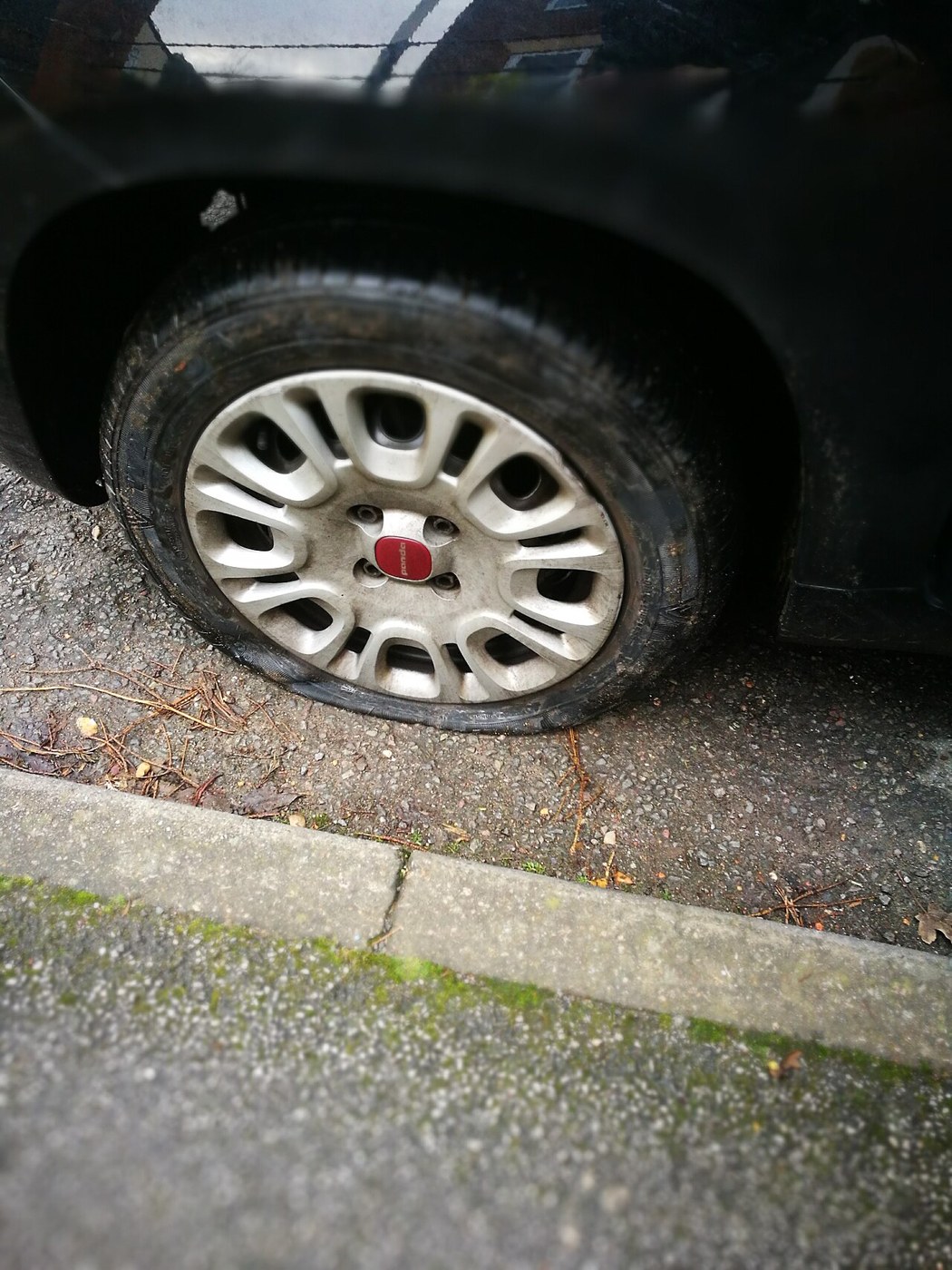
A pressure warning, new vibration or suddenly different handling deserves attention. Avoid abrupt inputs and bring the vehicle to a suitable safe place as far as it can be controlled. Exact operation depends on the vehicle and situation. Do not continue at speed to establish the fault more clearly.
Being close to the destination does not justify continuing with an unknown defect. Driving underinflated can cause additional tyre damage. A car still being able to move does not establish that further use is safe. When uncertain, seek assistance rather than inventing an acceptable remaining distance.
Protect people first
Follow the applicable breakdown-safety rules and leave a dangerous area only when it is safe to do so. On a fast road, consider exiting on the side away from traffic where the circumstances allow. Do not remain between the vehicle and moving traffic to photograph tyres or search for tools.
Repairing the car yourself on a hard shoulder is not a condition for receiving help. Tools and a spare do not make an unsafe location suitable. Contact emergency services for immediate danger and the appropriate assistance provider for an ordinary technical breakdown. Describe the location precisely and follow the instructions given.
Give useful information
Identify the vehicle, direction of travel and recognisable location details. Describe observations such as a warning, visible deflation, impact or unusual noise. Mention a trailer if one is attached and any passengers needing particular assistance. A factual account is more useful than an unverified repair diagnosis.
Photographs may help later but should be taken only from a safe position. A tyre on the traffic side does not need close inspection merely to create evidence. Protecting people matters more than a complete photo sequence. Preserve enough phone battery for further communication too.
Before continuing
A puncture solution may have restrictions. Temporary spares, sealant and run-flat systems differ and need their own instructions. Ask the person providing assistance what happens next and whether immediate workshop assessment is required. Do not transfer limits from another system to the one being used.
Once safely assisted, record what was done and which wheel was affected. Have temporary measures completed properly and the cause investigated. Resume the original journey plan only when further use has been meaningfully assessed. The vehicle being mobile again does not automatically restore every speed, load or remaining-distance option. Keep any instructions supplied with the assistance record so that another driver does not mistake a temporary arrangement for a fully resolved repair.