Weight comes from several places
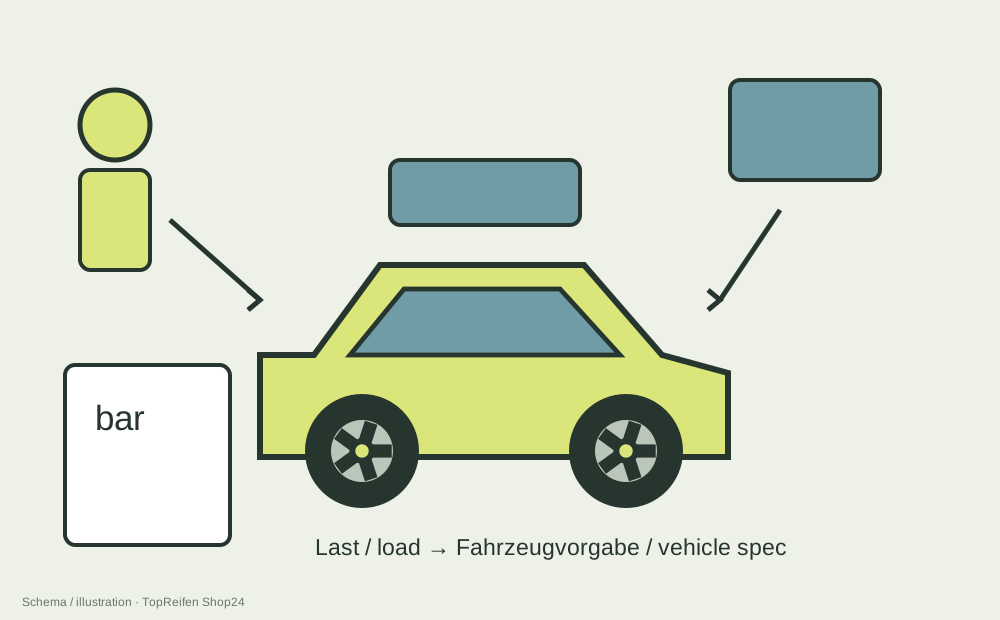
A holiday load includes more than suitcases in the boot. Passengers, roof bars, a roof box, bicycles and accessories all add mass. Permitted total mass, axle limits and roof load are different restrictions. Spare capacity in one category does not establish compliance with all the others.
Do not judge a narrow weight margin solely by unused space. A large load area may look full without being overweight, or still have room when a limit has already been reached. Appropriate weighing can reduce uncertainty when plans approach a limit. Use the actual departure configuration, rather than the empty car several days beforehand.
Pressure follows the vehicle information
Find the information for the vehicle and fitted tyre specification. Some cars distinguish normal and full loads or additional operating conditions. Match the trip to those instructions instead of adding a universal amount of pressure. A maximum figure on the tyre sidewall is not automatically the intended operating setting for the car.
Check under the specified cold conditions. If measuring only after a long drive, account for warming; do not simply reduce a warm tyre to the cold target. Ask the vehicle manufacturer or workshop if the correct setting is unclear. TPMS does not choose the appropriate target pressure for you.
Load rating is not extra luggage permission
The load index describes a tyre capability under defined conditions. It does not raise the vehicle's permitted total or axle loads. A higher-index tyre therefore does not automatically allow more luggage. The complete combination remains decisive, particularly when wheels or tyres differ from the original specification.
Distribute and restrain luggage according to the vehicle instructions. Concentrating heavy objects in one area may load particular parts more heavily even when the overall amount seems reasonable. Restraint also protects occupants, so tyre planning and secure packing are connected tasks.
Reconsider the setting after unloading
Once holiday equipment is removed, establish the correct arrangement for everyday use again. Do not leave a setting chosen for special circumstances unchanged for months without reconsidering the vehicle instructions. Where useful, note which setting corresponds to which loading condition.
Repeated pressure loss or unusual wear should not lead to experiments with different settings. Have the cause assessed. Careful load planning cannot repair a damaged tyre or solve a mechanical fault. Its purpose is to keep an otherwise suitable, sound tyre set within its intended operating conditions. That distinction prevents a well-organised packing list from becoming false reassurance about the vehicle itself.