Do not inspect in the traffic lane
Choose a suitable stopping area away from moving vehicles. An unusual noise is not a reason to kneel beside passing traffic. If the car feels unsafe or loses air rapidly, first arrange a safe stop and assistance. A detailed personal inspection comes afterwards.
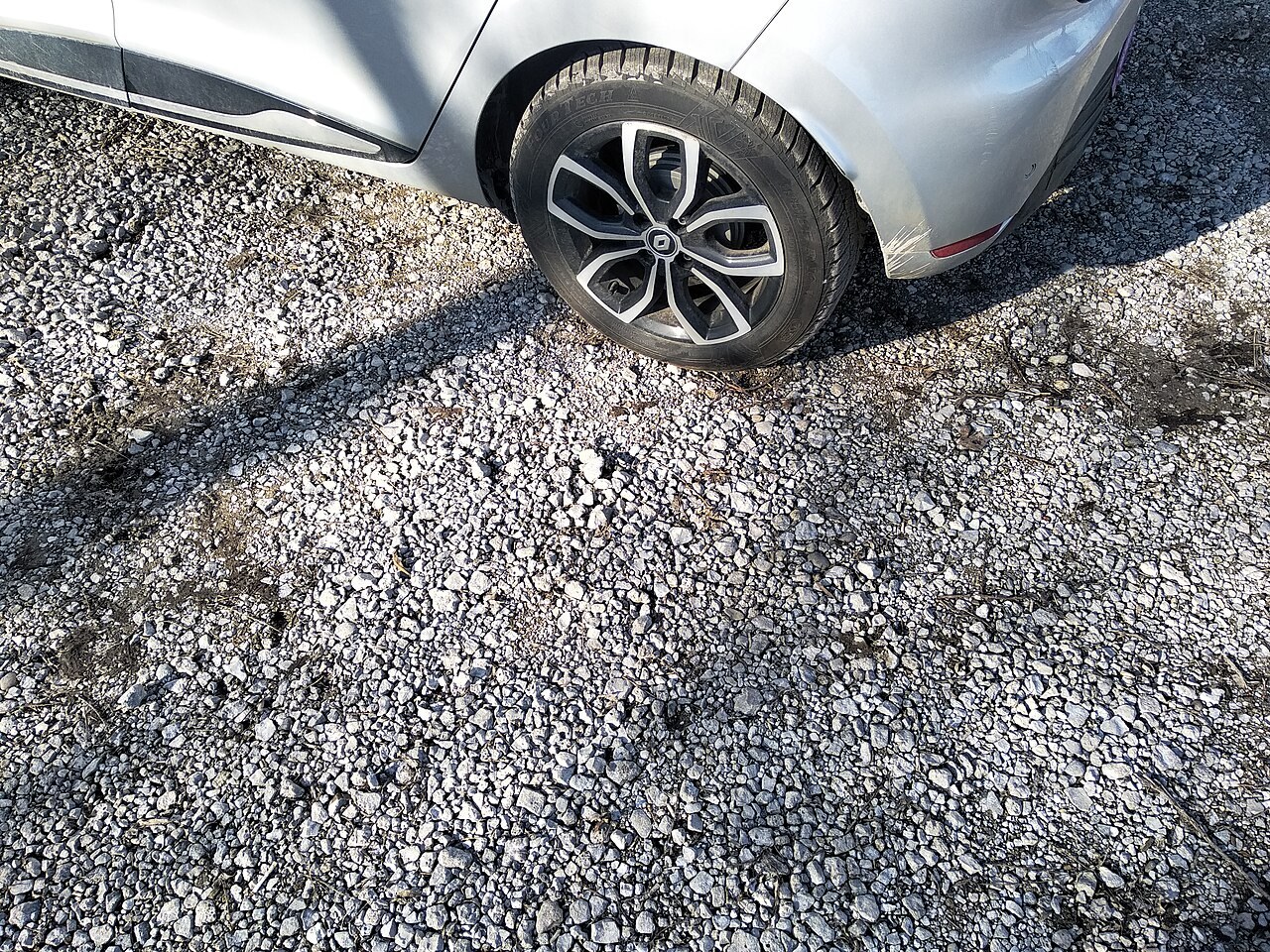
Record whether a particular impact, sharp edge or other incident preceded the concern. That is more useful later than simply saying the car travelled on gravel. Not every symptom has the same cause, and an existing fault may first become noticeable on an uneven road.
What can be seen externally?
Look at accessible tyre and wheel areas. Obvious cuts, bulges, missing material or distortion need professional assessment. A small stone lodged between tread grooves differs from a penetrating nail or screw. Do not casually remove an object that may be sealing a puncture and allow air to escape.
A visual check cannot exclude damage to hidden areas or internal structure. If noise, vibration or pressure differences remain, have the tyre inspected. It does not have to become visibly flat before assessment is worthwhile. A wheel that looks ordinary from outside may also need further examination after a substantial impact.
Do not improvise pressure changes
Normal road vehicles retain their specified pressure requirements after a short gravel section. Do not lower pressures spontaneously because you have read advice for specialised off-road driving. Such procedures concern particular vehicles, tyres and conditions; they are not a general instruction for a passenger car on a gravel access road.
If a loss is suspected, measure under known conditions and compare with the vehicle specification. A warm reading after driving is not directly comparable with a cold morning measurement. Repeated loss from one wheel needs investigation regardless.
Before the next long section
Resolve outstanding concerns before a long or fast journey. A short drive to accommodation may leave an opportunity for inspection; it does not prove that the subsequent motorway section will also be uneventful. Describe the incident, affected wheel and observed change to the workshop.
If damage is found, retain a photograph and the findings so that the work performed remains traceable. If everything observed is normal, continue the regular checks specified for the vehicle. Every gravel track does not require an invented special maintenance programme, but concrete new signs deserve attention. That distinction avoids both ignoring an actual problem and treating an ordinary access road as proof that every tyre must be damaged.