Why the size list is not the whole answer
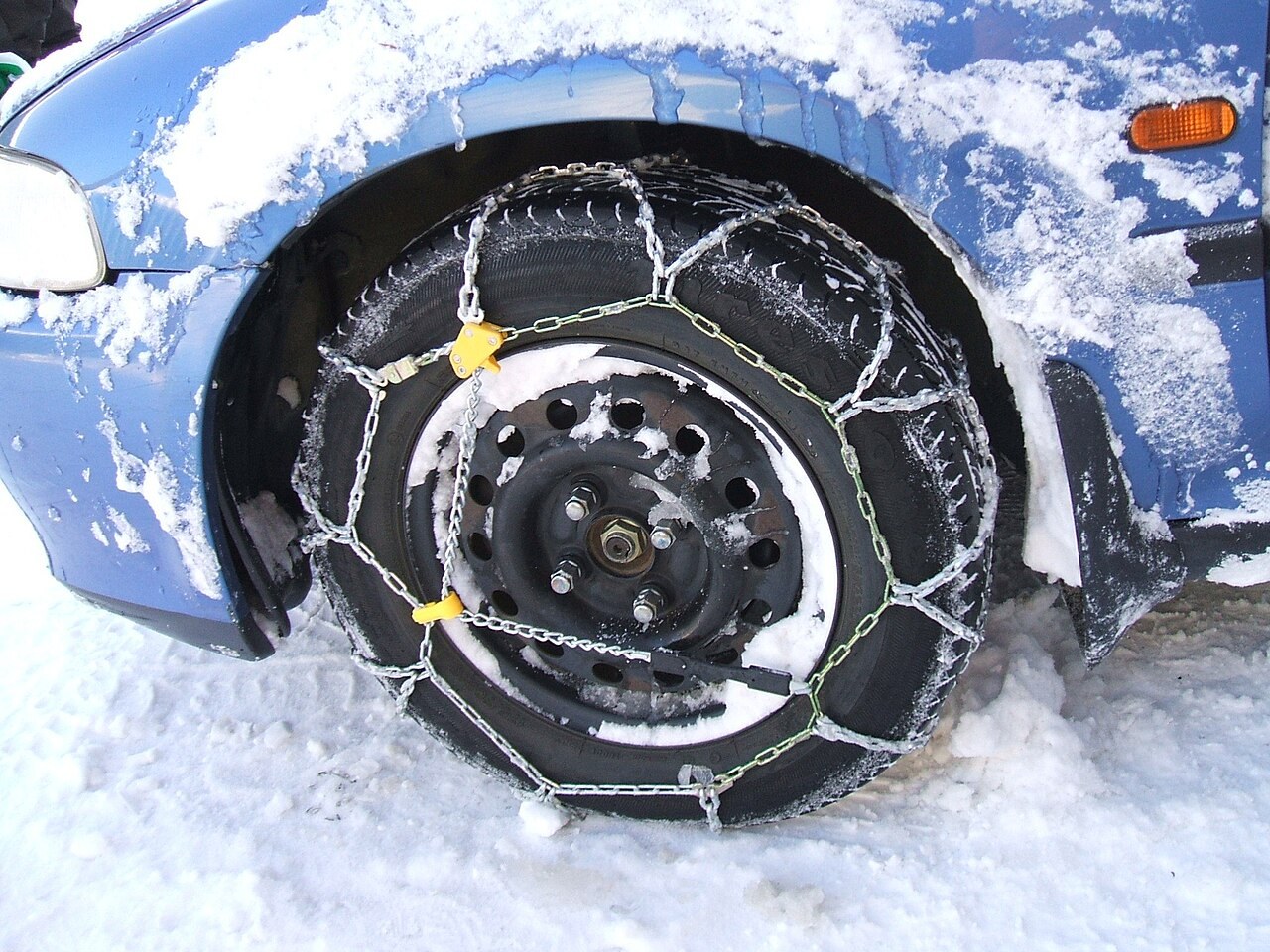
A chain must fit the tyre's circumference and width, but it also needs room inside the wheel arch. Suspension movement, steering and nearby components affect that second question. A chain may therefore list the tyre dimension printed on the sidewall while remaining unsuitable for the exact vehicle combination.
Find the snow-chain instructions in the vehicle handbook. Include the documents for aftermarket wheels where applicable. A statement excluding chains for a certain size cannot be overridden by a generic online size finder. Even a product advertised as especially slim needs suitable approval or confirmed compatibility.
Account for wheel changes
Different rim widths, offsets and spacers can alter the available space. Having used chains with an earlier wheel set does not establish suitability for the set fitted now. Keep all wheel and vehicle details available when asking a specialist about a solution.
Where front and rear tyre sizes differ, the intended chain axle also has to be established. Follow the vehicle information rather than habit, particularly with all-wheel drive. A system used on the front axle of another car is not automatically appropriate for the rear axle of this one.
Do not try to create your own approval
A cautious lap around a car park does not prove adequate clearance in every relevant situation. Loading, suspension compression and steering angle can produce different gaps. An improvised finger-width or ruler test is likewise not a substitute for the specified technical documents and assessment of the combination.
If the information is unclear, resolve it before the trip with the vehicle or chain supplier, or a qualified workshop. A different approved wheel-and-tyre combination may be a solution. It still needs complete verification rather than simply selecting the smallest available diameter.
Include the result in journey planning
If the existing set has no permitted chain solution, do not discover that limitation at a signed chain-required road. Consider suitable equipment, route or transport alternatives in advance. An alternative road must actually be available, rather than existing only as a theoretical line on a navigation screen.
Keep the verified combination with the chain instructions. Put the question back on the list when buying another wheel set if similar journeys remain planned. That turns a one-off enquiry into a traceable requirement, reducing the risk of losing it during later changes. It also makes future discussions with a supplier more precise than simply saying that the car once had compatible chains.