Divide the trip into sections
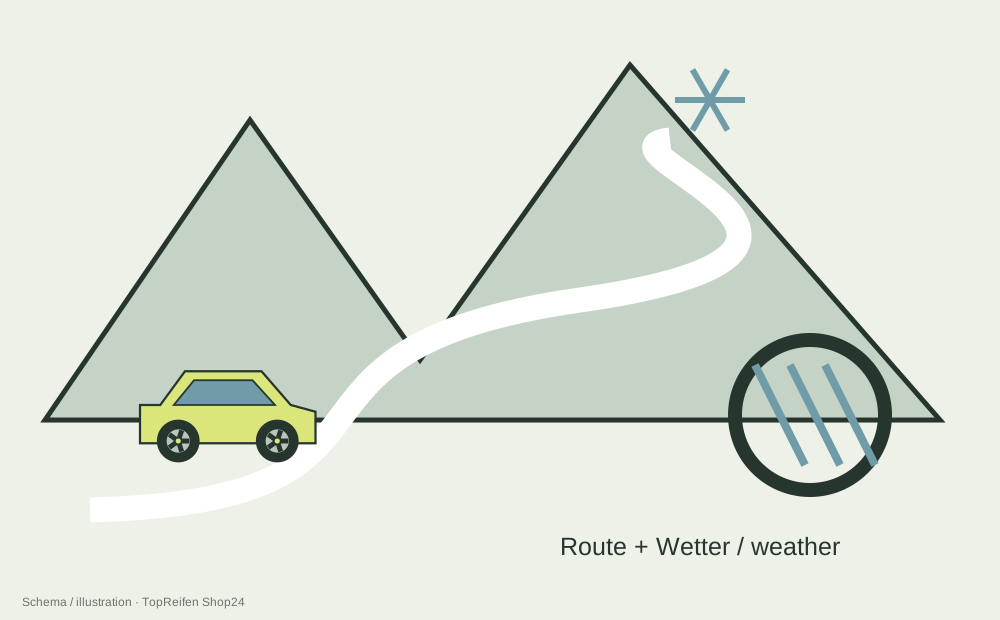
Start with the approach, the place where you will stay and possible excursions. A motorway section in a valley differs from the final access road to accommodation on a hillside. Even if most mileage is on cleared main roads, a short higher section may determine the equipment needed. Ask the accommodation about its actual access route, without treating that advice as a substitute for road signs or current official reports.
Consider alternatives. A closed pass or weather-related diversion may change the planned route. A road routinely used in summer may not be available in winter. Rather than saving only the shortest navigation route, consider which alternative remains realistic with the equipment you have.
Check each country's requirements
Consult current information from the relevant authorities for transit countries and the destination. Vehicle category, tyre marking, tread depth, dates and actual conditions can all matter. Do not apply Germany's situational winter-tyre rule to the entire journey. Chain requirements and recognition of particular traction aids need separate consideration.
Record the requirements and the date checked. A previously saved summary may be outdated by the next trip. If information seems contradictory, resolve the specific vehicle and journey question instead of choosing the more convenient interpretation. This preparation is particularly important for a rental car or a vehicle whose wheels you did not choose yourself.
Assess the fitted set
Inspect every tyre for condition and remaining tread. Look for differences between wheels and have uncertain damage assessed in advance. A marking alone does not establish that the set in its present condition suits the journey. Allow time for replacement if an inspection shows that it is needed.
Pressures follow the vehicle information, tyre specification and loading. Use the actual holiday load: passengers, luggage, a roof box and other equipment can substantially change the weight. Do not apply a generic pressure increase for mountain driving. The correct values must be identifiable for the vehicle and checked under the specified measuring conditions.
Resolve chains before departure
First establish whether chains are permitted with the car's exact wheel-and-tyre combination. Only then choose a compatible chain model. A tyre size printed on the box does not by itself establish adequate wheel-arch clearance. On an all-wheel-drive vehicle, do not guess which axle takes the chains; consult the vehicle instructions.
Familiarise yourself with the instructions and components in a safe place. Missing parts or unclear steps are especially awkward to discover after unpacking chains in poor light and falling snow. Gloves, a suitable mat and accessible storage can help preparation. None of this makes it appropriate to fit chains in a dangerous position beside moving traffic.
The same destination can mean different requirements
Imagine two visits to the same accommodation. On the first, every journey stays in the valley and the car can remain parked during heavy snow. On the second, early trips to a higher starting point are necessary each day. The destination is identical, but the need for dependable access and suitable equipment differs. Record the unavoidable individual journeys rather than only the place name.
Another example is changing vehicles shortly before departure. Previously used chains may be unsuitable despite a similar tyre size because the rim, available clearance or permitted fitting axle has changed. Do not carry the old packing list forward unchanged. Compare the relevant vehicle documents with the set actually fitted again.
These examples do not require an elaborate travel plan. A short note listing essential routes, alternatives and confirmed equipment provides a useful working basis. It shows which decision remains open before reservations and fixed appointments reduce the room for adjustment.
Keep decisions open while travelling
Check weather and road reports again shortly before departure and before demanding sections. A plan made two weeks earlier cannot describe current conditions. If a route no longer matches the equipment or weather, waiting, turning back or choosing a suitable alternative belongs within the plan.
Load the car so that visibility equipment, puncture supplies and chains, where needed, remain accessible without unloading everything. Keep essential vehicle details and assistance contact information available without depending entirely on mobile reception. This does not replace maintenance, but it reduces searching when a decision is needed away from home.
After a substantial impact, pressure warning or new vibration, have the cause investigated. Do not assume a problem is simply normal on a mountain road. The tyres must also remain suitable for the return journey; preparation does not end on arrival at the accommodation.