A few days before packing
Inspect every tyre while there is still time for assessment or replacement. Look for visible damage, unusual wear and the remaining tread condition. Do not position the vehicle dangerously to reach a hidden area; a workshop can inspect the complete tyre where needed. An inspection passed months ago says nothing about damage acquired since.
If a tyre has repeatedly needed air, resolve the cause before departure. A long motorway run is not an appropriate experiment to see whether the problem returns. Tell the workshop which wheel is affected and how the loss was observed. Early assessment also leaves time to obtain the correct replacement specification if necessary.
Plan around the actual load
The everyday pressure setting for a few occupants may differ from the fully loaded recommendation. Read the vehicle placard or handbook and match it to the real journey. Do not apply a generic increase from a holiday checklist. A large roof box does not increase the car's permitted total mass either.
Include passengers, luggage, cycle carriers and other equipment. If the available weight margin is narrow, appropriate weighing may be useful. Inflation pressure cannot compensate for exceeding permitted loads. Confirm that the fitted wheels and tyres remain approved for the vehicle, particularly after a recent modification.
On departure day
Measure pressure under the cold conditions specified by the vehicle manufacturer. Tyres warmed by driving give different readings; do not release air merely to bring a warm tyre down to the cold target. Check valve caps and whether the monitoring display is plausible. Understand a warning before departure rather than simply resetting it.
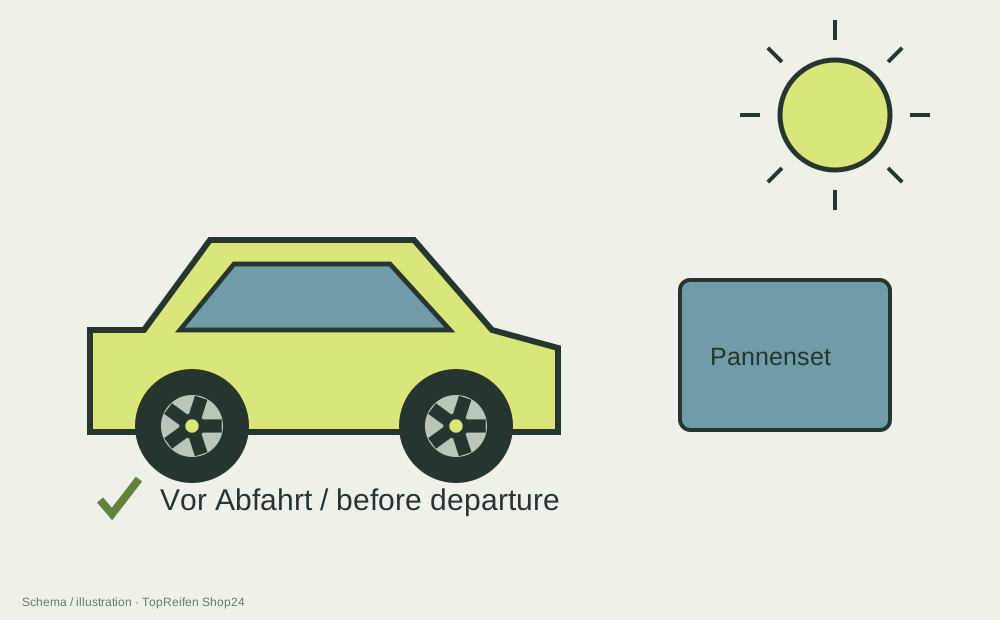
Check the puncture equipment too. Sealant has a limited usable life, a spare needs to be in suitable condition, and the associated tools must be present. Carry the locking wheel-bolt key if required. Arrange essential items so that they can be reached without unloading the entire car.
During and after the trip
From a safe position during breaks, look for obvious changes. A rest stop is not a technical inspection, but it may reveal new damage or a visibly deflated tyre. Vibration, unusual noise or a pressure warning needs investigation. Being close to the holiday destination does not make continued driving more dependable.
After returning and unloading, reconsider the pressure settings for normal everyday use where appropriate. Keep receipts for work performed during the trip and have temporary puncture measures properly resolved. The holiday check then becomes more than one glance before departure: it is a record of how the vehicle was prepared for, and returned from, a different pattern of use.