Identify the actual kit
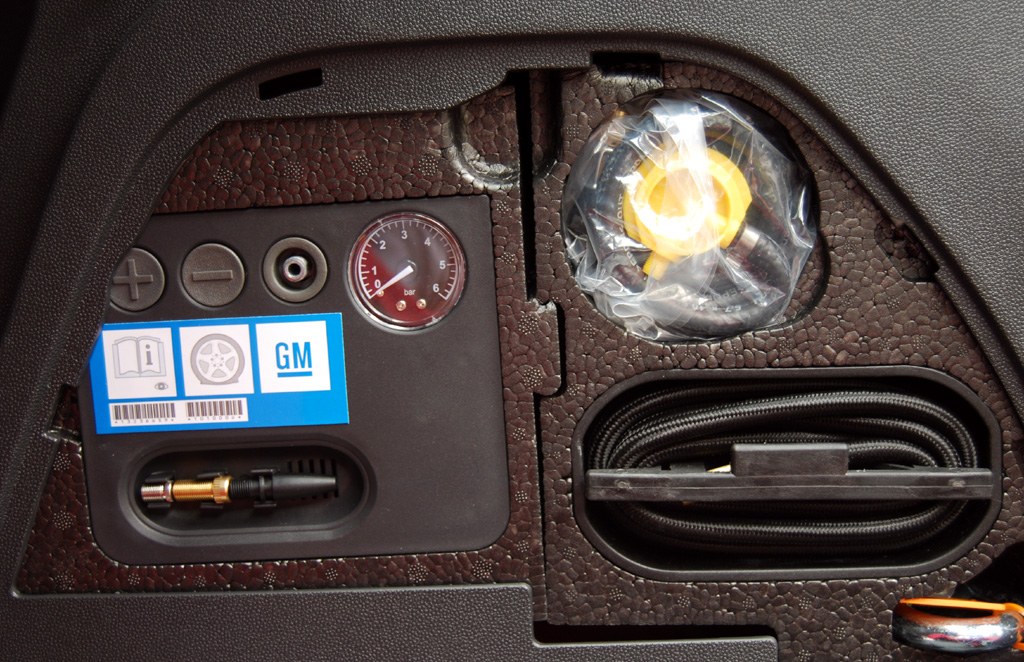
Open the storage compartment and establish which parts are present. A compressor and sealant container are common, but designs vary. Read the instructions for the exact system and vehicle. An online description of a similar kit is not a dependable substitute.
Check the sealant expiry date and the condition of the container, hose and connections. A previously used bottle is not automatically intended for another puncture. Replace missing parts or items with unreadable identification before departure. Having a bag in the boot does not establish readiness.
Power and access
Use the instructions to establish how the compressor is powered and its operating conditions. A prescribed function check is not the same as an arbitrary prolonged test run. Know where the plug and required connections are. For a rental car, follow the rental company's procedure as well.
Pack so that the kit and warning equipment remain accessible. Having to unload bicycles and every suitcase makes poor-weather situations unnecessarily complicated. Accessibility does not justify leaving heavy equipment loose in the cabin, however. Secure loading still matters.
Read the limitations in advance
Sealant cannot address every tyre injury. The product instructions specify acceptable damage types, positions, sizes and other conditions. A badly damaged tyre or injured sidewall does not become usable simply because a kit is carried. Required pressure checks and any limited onward travel must follow the particular instructions.
Do not copy a generic speed or distance limit from another product. Know where to find the applicable limits instead. If the requirements are not met during a puncture, or application cannot be performed safely, use roadside assistance. Carrying a kit does not oblige anyone to work beside moving traffic.
After using it
Tell the workshop which product was applied. The tyre then needs professional assessment; a temporary seal does not confirm a permanent repair. Effects on other components and further usability also need clarification.
Replace consumed items and restore the equipment to a ready condition. Otherwise, dealing successfully with one puncture may leave a gap before the next journey. Store the instructions with the kit and check date and completeness again during the next preparation. These concrete checks are more useful than remembering that the car once contained a puncture kit. If someone else uses the vehicle, tell them that the kit has been used so that they do not assume an empty container is ready for another emergency.