Find the date group
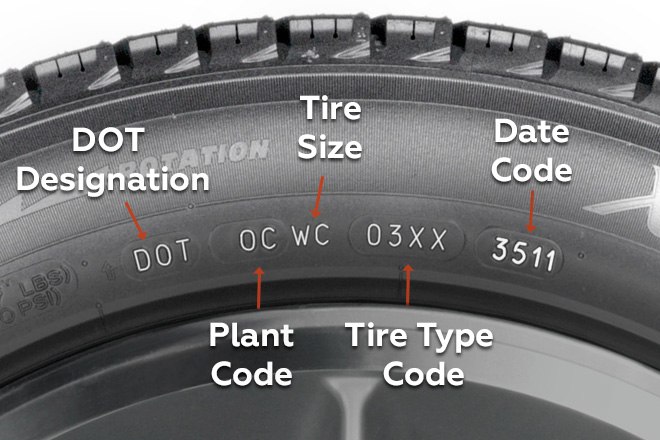
Modern tyre manufacturing dates use a four-digit group. The first two digits give the production week and the final two the year. For example, 2424 means week 24 of 2024. It is not a day-of-month date or the date the tyre was fitted to the vehicle.
The complete marking including date may be readily visible on only one side. If the appropriate group is absent outside, the other side needs checking. Have inaccessible areas inspected safely by a professional rather than working beneath an inadequately supported vehicle.
Not every number is a date
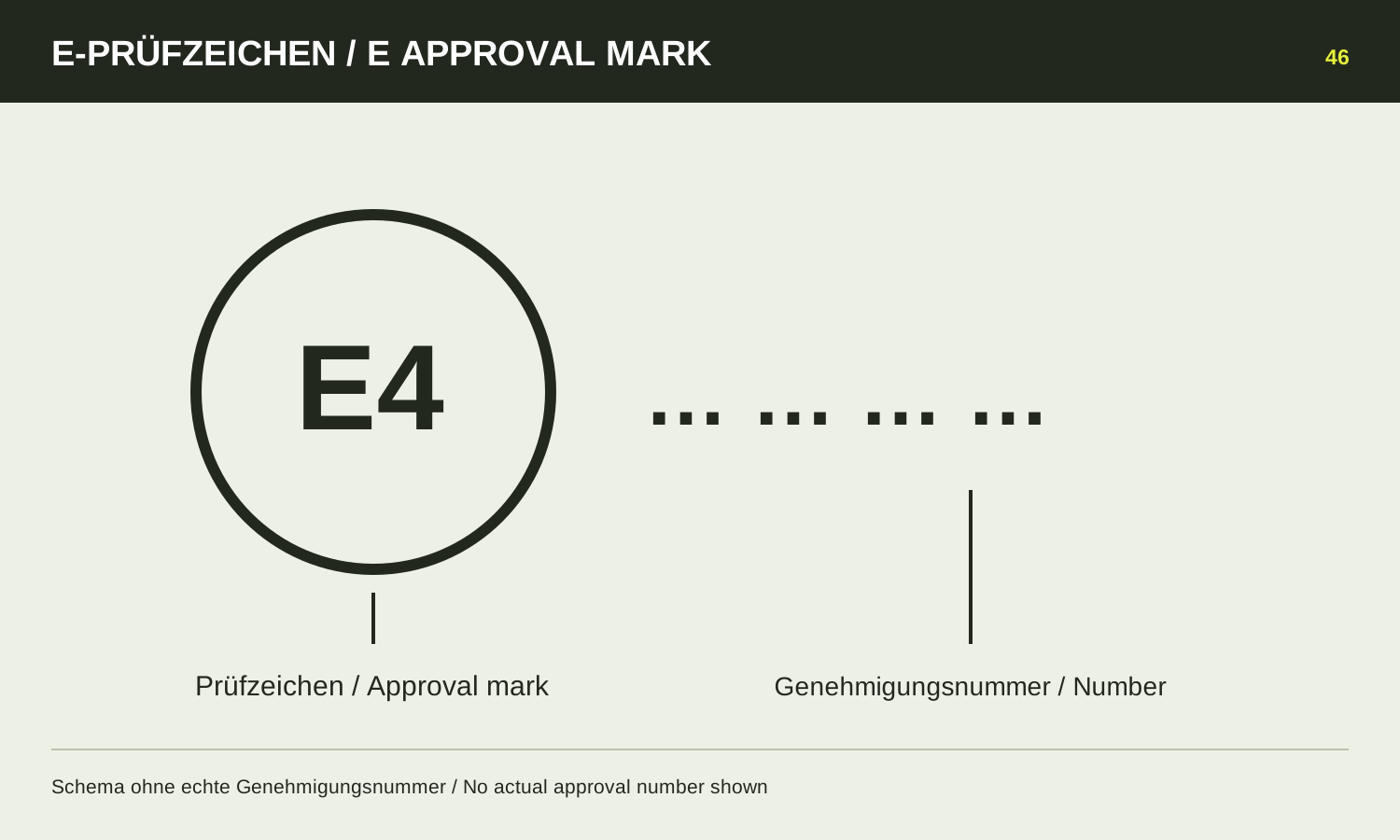
A sidewall contains many codes. Do not confuse the date group with size, load index or an approval number. Photograph the surrounding marking, not four isolated digits. A manufacturer or specialist can help identify an unclear code.
Older three-digit codes belong to an earlier system. Do not reinterpret an unclear number creatively to make an old tyre appear recent. Uncertain age and history need to be included in its assessment.
Assess age and condition together
Manufacture date measures time since production, not storage quality or previous loading. Two tyres of identical age can have different histories. Deep tread is no more a complete condition certificate than a recent date. Damage, previous pressure loss and use require consideration too.
Follow vehicle and tyre recommendations and any special rules for the application. The date group does not create one universal expiry date for every passenger-car tyre. Professional assessment is more useful than an arbitrary online age threshold when unsure.
Document the purchase
If supply age matters to you, agree it in writing before ordering. Check the tyres before fitting and retain the invoice. Record the actual fitting date separately; it answers another question from production week.
Record every tyre in a set individually. Different dates are not automatically a defect, but should match the agreement. A short record helps later checks, particularly for seasonally stored wheels or a rarely used spare. It also prevents the purchase date being mistakenly treated as the production date several years later.