From sidewall to groove
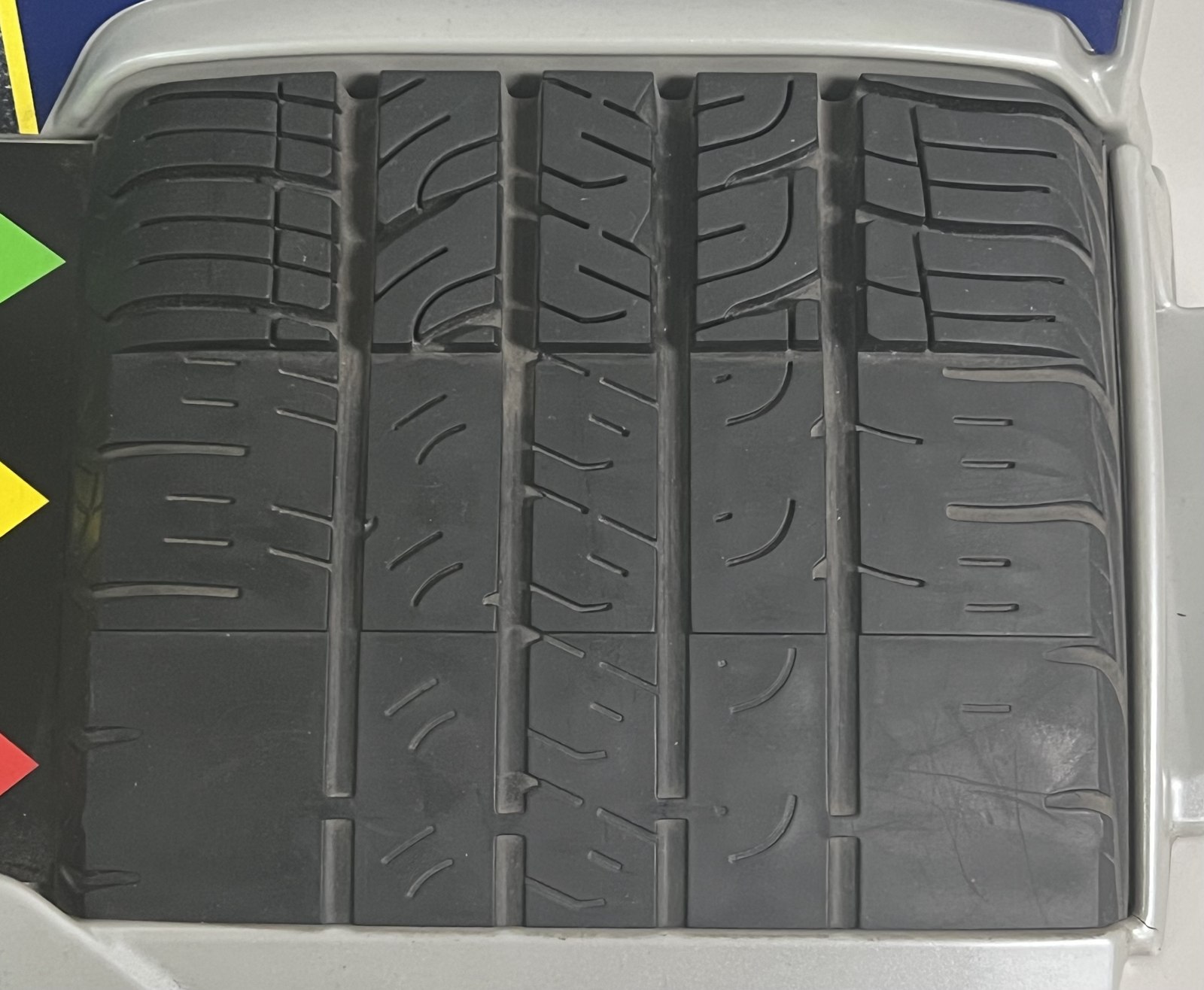
TWI means Tread Wear Indicator. A sidewall mark points towards an area containing a wear indicator in the tread. Some manufacturers use a symbol instead. The indicator itself is a small raised bar in a groove, not the letters printed on the sidewall.
When the surrounding tread reaches the height of the relevant bar, that wear threshold has been reached. Consult manufacturer information where several additional indicators are present. A winter indicator can have a different meaning from the legal-minimum indicator.
Inspect several locations
Wear can be uneven. One apparently satisfactory indicator in an accessible area does not represent the whole circumference. Check several areas and use an appropriate depth gauge where needed. Have inaccessible locations inspected by a workshop.
Section 36 StVZO describes the main-tread minimum for ordinary passenger-car tyres in Germany. The legal limit is not a promise of unchanged performance until the final moment. Condition, seasonal application and manufacturer advice can justify earlier replacement.
Assess damage separately
A tyre with tread remaining above the bar can still be damaged. Cuts, bulges and unusual pressure loss are not made harmless by sufficient depth. Treat the TWI as one inspection point among several. New abnormal behaviour also warrants investigation.
If one area wears particularly quickly, establish the cause. Replacing without checking pressure or suspension issues may allow the next set to develop the same pattern. Record the wear for the workshop discussion.
Ask the right purchase questions
For used tyres, ask about wear distribution and overall condition rather than a single depth number. A photograph of one TWI is not a complete assessment. It may intentionally or unintentionally show the best location.
For your own checks, use a repeatable measurement method and record wheel position. This makes changes easier to recognise over time. A written measurement is more informative than remembering that the tread looks roughly as it did last year. Keep the date as well, so the distance and time between checks can be understood.