A warning still matters
A run-flat tyre may look less obviously deflated than a conventional one. That does not justify ignoring a pressure warning. Follow the vehicle instructions and establish the situation safely. Whether continued travel is allowed, and under what conditions, comes from the applicable guidance rather than the model name alone.
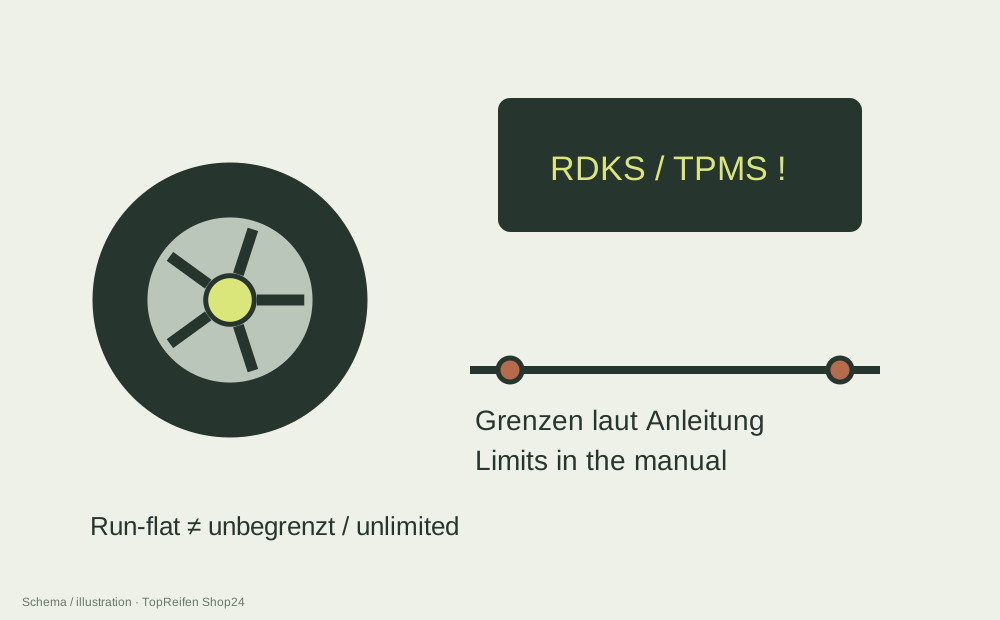
Avoid assuming a remaining distance is always available. Loading, damage and system requirements may matter. If the vehicle feels unsafe or damage is obviously severe, a safe stop and assistance take priority. Run-flat capability does not mean every puncture, impact or sidewall injury can be endured without further consequences.
Keep the right instructions available
Before travelling, establish that the tyres fitted actually have the relevant technology and suit the vehicle. Its previous configuration does not prove the last replacements used the same construction. Keep the exact product designation and relevant guidance accessible when needed.
Widely repeated speed and distance figures should not be transferred automatically to every system. Read the particular limits and any additional conditions. Correct operation of the pressure-monitoring system also belongs to the intended arrangement. A persistently unresolved warning-system fault is therefore not a minor detail.
Record travel after the warning
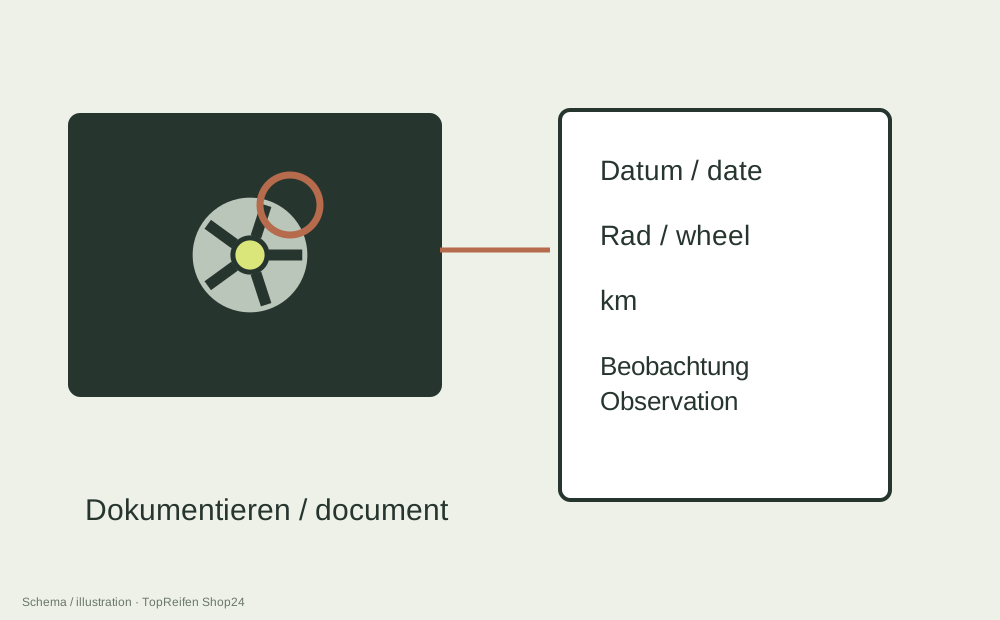
Note when the warning appeared and approximately how far the car travelled afterwards. Tell the workshop about loading and other symptoms. If distance is only an estimate, identify it as such. These details help assess the tyre's actual condition.
A reinflated tyre that initially holds air is not automatically approved for further use. Earlier stress can remain relevant. Establish whether continued use or repair is even an option under the manufacturer requirements. Policies can differ between manufacturers and specifications; a general forum assurance cannot replace them.
Consider replacement within the whole set
If replacement is required, the new specification must suit both vehicle and remaining tyres. Do not choose an arbitrary different construction solely because it is available quickly. The workshop needs to assess the appropriate solution, including monitoring and puncture arrangements.
Retain the invoice and findings and ensure warnings or outstanding system procedures are resolved. The puncture is not complete merely because the car reached the workshop without towing. What matters is returning it to a demonstrably suitable and functional arrangement. Share any temporary restrictions with other drivers until that work is complete, so that continued mobility is not mistaken for unrestricted normal use.