Start with suitable options
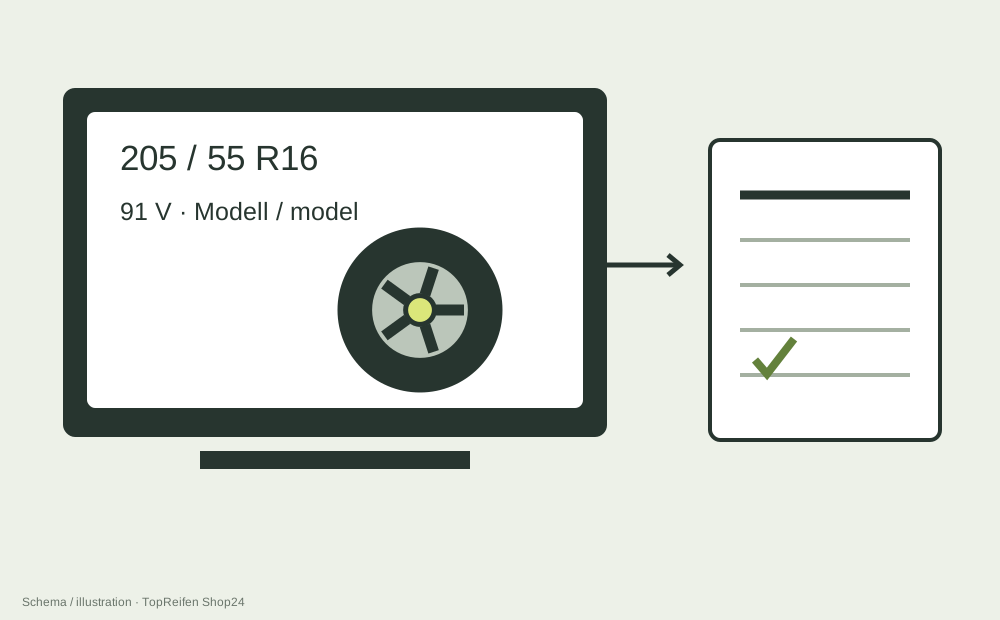
A cost comparison is useful only between arrangements that suit the vehicle and the journeys you need to make. If you must drive reliably in winter conditions, do not remove that requirement simply because another arrangement looks cheaper. All-season tyres can be an option depending on the product and use, but suitability for your conditions comes before adding up the expenditure.
Record annual distance, the likely winter share and any planned changes. Moving home, a longer commute or more mountain journeys may alter the pattern. Separate evidence from assumptions. Last year's mileage is usually traceable; the service life of tyres you have not yet bought is not a certain figure.
What genuinely needs to be purchased?
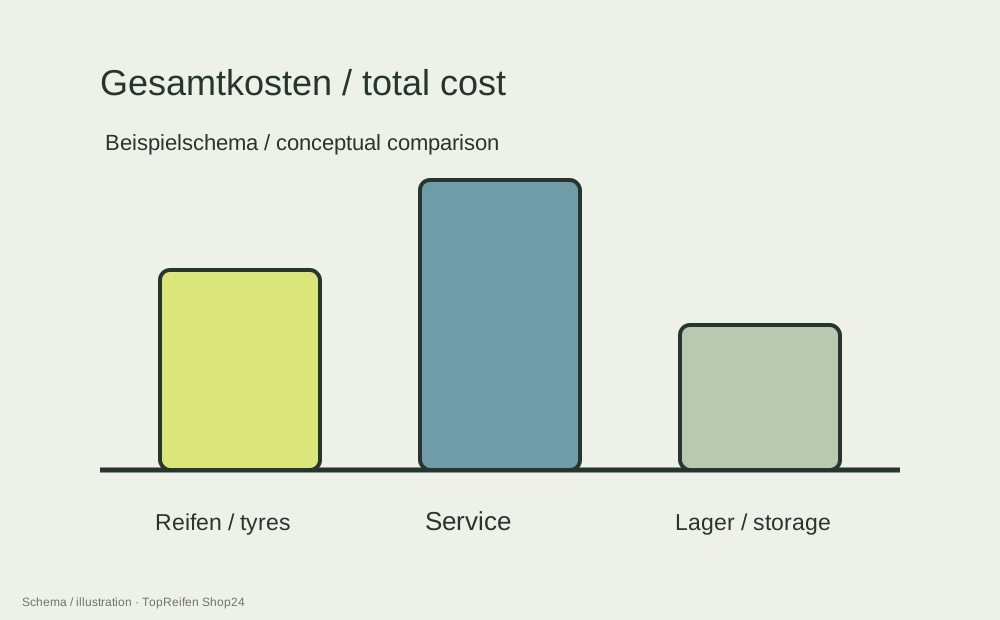
Two seasonal wheel sets may involve a second set of rims, suitable sensors, recurring changeovers and storage alongside the tyres themselves. All-season tyres do not eliminate every workshop task: pressure and condition checks, and any appropriate rotation, balancing or other work, remain relevant. List only the services you actually need or would buy.
Existing equipment changes the starting point. If two suitable, usable sets have already been paid for, their original purchase price is not a new expense for next year. Equally, a supposedly free existing set is not usable if its condition or suitability rules it out. Keep two columns: “already owned and usable” and “still to purchase”. This prevents a comparison between new equipment on one side and fully owned equipment on the other from concealing that difference.
Compare a period, not just one purchase
Use the same time span for both options, such as the period for which you expect to keep the car. Add the actual purchases and services you expect within it. Dividing that sum by the number of years gives a simple annual average. This is a budgeting method, not a statement about tyre service life. A planned ownership period must never justify continuing to use worn or damaged tyres.
For an illustrative four-year comparison, enter each option's necessary initial purchases and four years of confirmed service charges. Whether a further tyre set will be needed during that period is a separate assumption to record openly. Two calculations with different replacement timings are more useful than one apparently exact answer.
A higher initial payment and higher recurring expenditure are different things. If spreading payments matters, also examine the year in which each bill would arise. Two options with similar totals may require very different first-year spending. That timing can be more informative than a small difference in the calculated annual average.
Do not count the distance twice
Summer and winter sets share the annual distance between them. It would be wrong to assign the full year's mileage to each and treat both as though they were used throughout the year. Nor can a test's projected mileage be transferred directly into a promise for your car. Driving style, vehicle, pressure, routes and conditions affect actual use.
Remember that worn tread is not the only reason tyres are replaced. Condition, age, damage or changed requirements can bring replacement forward. A calculation based solely on purchase price divided by theoretical mileage is therefore incomplete, particularly for low-mileage drivers. State that uncertainty beside the result instead of presenting an unrealistic answer with several decimal places.
Improve the calculation with your own records
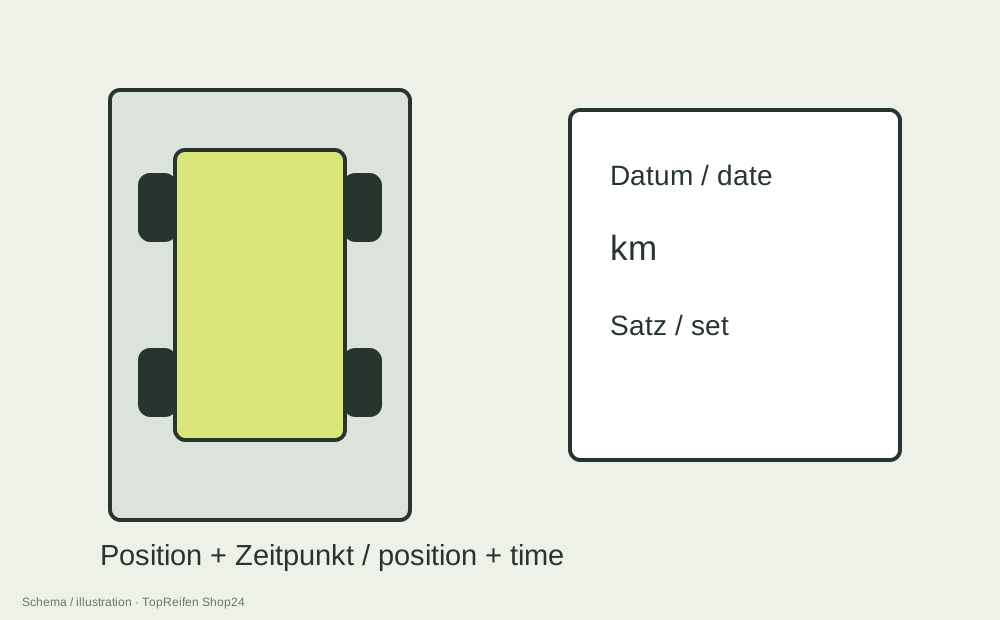
Keep invoices for tyres, changeovers, storage and sensor work. Record the odometer reading and reason for replacement. After a season, replace assumed service charges with actual spending. After using a tyre set, you will also understand your own usage better. The comparison then becomes an adjustable household budgeting tool rather than an attempt to declare one tyre type universally cheapest.