Assess the combination
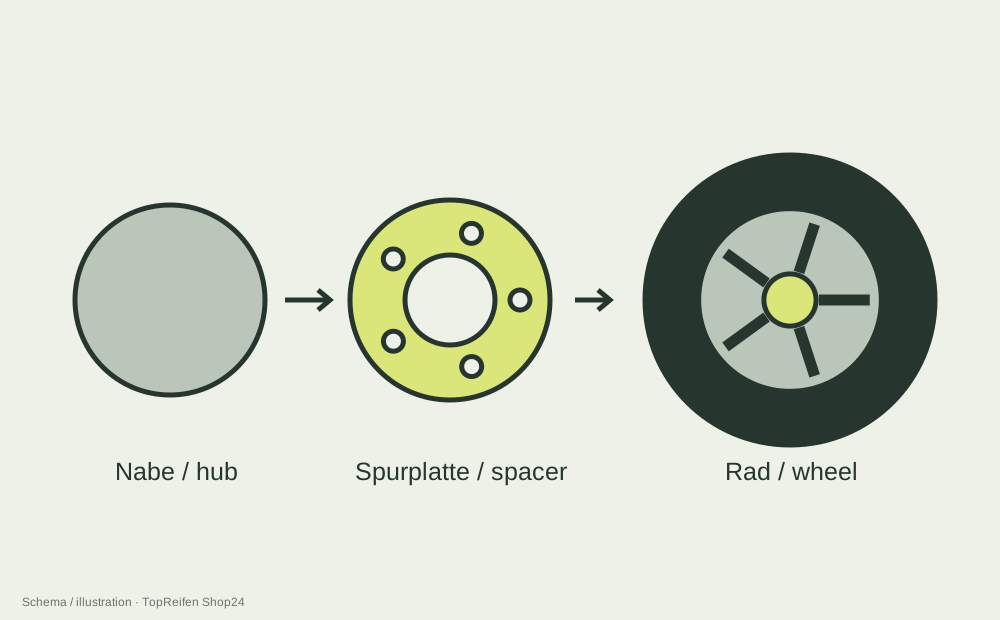
A spacer moves the wheel outwards, changing its relationship with the body and other components. Assessment concerns the exact vehicle, wheel, tyre and any other suspension modifications. A photograph of a similar car does not prove that the same arrangement is approved for yours.
Before making enquiries, gather the complete wheel identification, tyre size and vehicle details. Include lowering modifications or other alterations. Without that information, a seller might identify a physically fitting component without being able to assess the complete installation. Used parts with missing documentation are consequently not a straightforward shortcut to a sound decision.
Check documents before ordering
Have a qualified workshop or inspection organisation assess the proposed parts and their current approval documents. Conditions may concern particular wheels, tyres, fasteners or additional work on the vehicle. Establish whether inspection and further documentation are required. General product advertising cannot replace that assessment.
Fastening requirements depend on the particular system. There is no universal bolt length that can reliably be calculated from spacer thickness alone. Centring, bolt-seat shape and thread engagement also need to be suitable. Stacking spacers or assembling an unverified combination with whatever bolts are available is not an acceptable shortcut.
Inspection continues after installation
Clearance must exist under the relevant operating conditions, not merely with the stationary car unloaded and its wheels pointing straight ahead. The workshop or inspection organisation needs to apply the appropriate procedure. Have rubbing noises, vibration or other changes investigated promptly if they occur later.
Keep the product documents and evidence of the work with the vehicle records. A subsequent change of tyre or wheel requires the combination to be considered again. An arrangement previously checked is not automatically valid with a wider wheel or a differently sized tyre. If the car is sold, the next owner should also be able to identify the components actually fitted and the conditions associated with them. Clear documentation makes future servicing less dependent on assumptions about an altered vehicle.