Know the finish
Painted, polished and specially coated wheels can have different care requirements. A cleaner suitable for an ordinary painted wheel is not automatically appropriate for every other finish. Read both the wheel manufacturer's care instructions and the cleaning product information. If the wheel has an unknown refurbishment history or damaged coating, ask before trying a strong chemical.
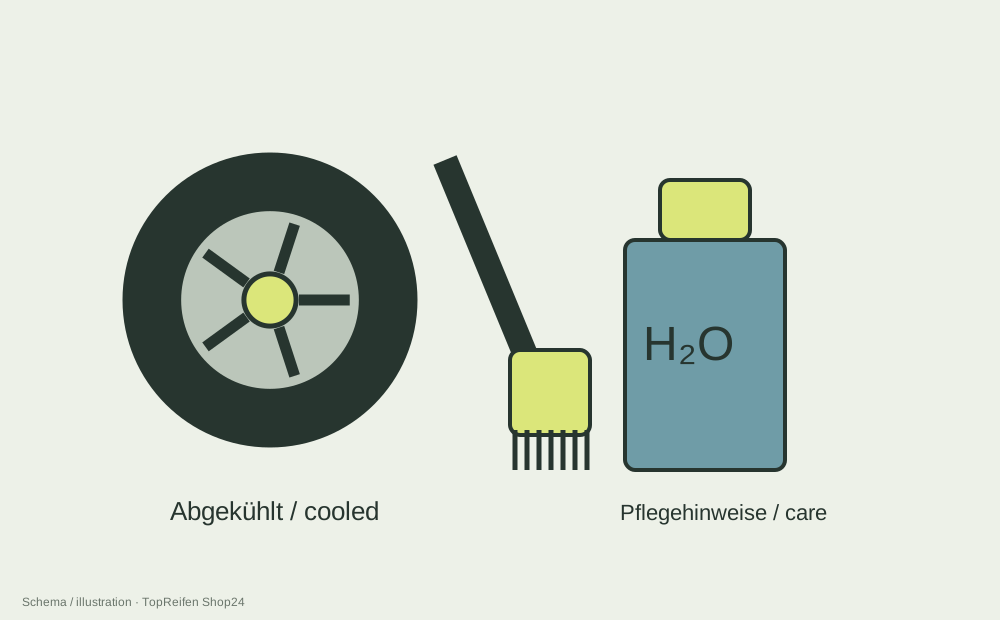
Work on cooled wheels, not immediately after driving with hot brakes. Rinse loose dirt away gently first. Suitable soft tools help prevent grit being dragged across the surface like an abrasive. A brush used for coarse dirt should not then be rubbed over a delicate finish without proper cleaning.
Dosage and time matter
More cleaner and a longer dwell time do not necessarily produce a better result. Stay within the product instructions and do not allow it to dry on the wheel. Do not mix different cleaning chemicals. Even an acid-free label does not remove the need to check compatibility with the material.
Rinse residues thoroughly as instructed. Do not direct a pressure washer at valves, damaged paint or other sensitive areas from an arbitrarily short distance. Appropriate distance and use depend on the relevant manufacturer instructions. Slippery dressing products should not reach braking surfaces or the tyre tread.
Use cleaning as a chance to observe
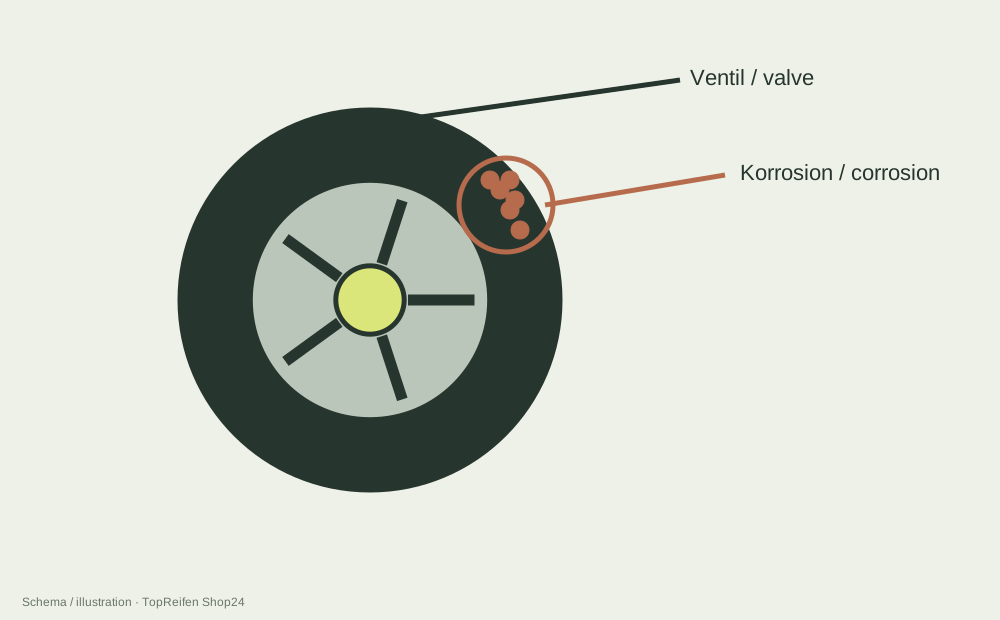
Flaking coating, scratches, distortion and recurring corrosion may become easier to see after cleaning. Document such areas rather than immediately disguising them cosmetically. A clean outer face does not establish structural soundness or prove that the complete wheel seals correctly.
If stubborn marks remain after suitable cleaning, establish whether they are actually dirt or a change in the surface itself. A short note of the product, method and result can help with future care. It also prevents escalating to stronger chemicals on each attempt. A straightforward, regular routine suited to the material is generally easier to control than occasional aggressive treatment of unidentified deposits. The aim is a clean surface that can be inspected, rather than removing every mark at any cost.