Identify the system first
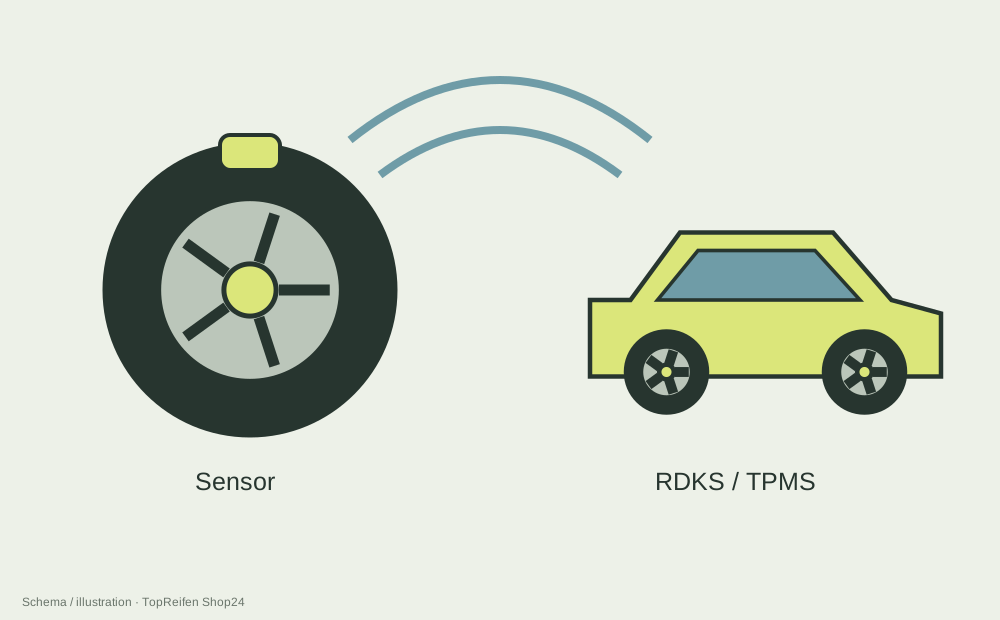
A direct system uses pressure sensors associated with the wheels. An indirect system evaluates other vehicle signals and does not need those pressure sensors in every wheel. Determine which arrangement the car uses from its documentation or a reliable equipment lookup. The appearance of a valve cap is not enough.
Do not automatically add four sensors to a second wheel set, or assume none will be needed. Give the workshop the exact vehicle version and, where appropriate, its identification details. Systems can differ within a model range and across production years. A sensor that physically fits a wheel is not necessarily electronically compatible with the car.
Make the quotation specific
Ask whether the price includes sensors, suitable valve components, programming and the required learning procedure. These terms can refer to different tasks. Some sensors are configured for a vehicle before installation, after which the vehicle still has to recognise the wheels. Other systems work differently. What matters is that the supplier describes the complete process for your car.
The history of used sensors matters. Unknown remaining service life or an unsupported specification could require the tyres to be removed again later. Have their condition and compatibility assessed before fitting. A very cheap complete-wheel offer can become expensive if this part of the job was never included.
Check the display at collection
Ask how the system becomes operational after the work. If initialisation is required, it must follow the vehicle instructions with the correct pressures already set. A warning should not simply be cleared to make it disappear temporarily. Recurring warnings need investigation even when the tyre looks normal from outside.
Keep a record of the sensors and service work charged for. At the next change, that helps establish which wheel set has already been configured. Whatever system is fitted, pressure checks in accordance with the vehicle instructions remain necessary. Monitoring does not replace looking for damage or establishing whether the tyres suit the planned load. A successfully recognised sensor confirms only one part of the complete wheel package, rather than approving the tyre, rim and vehicle combination as a whole.