Low mileage does not mean a recent tyre
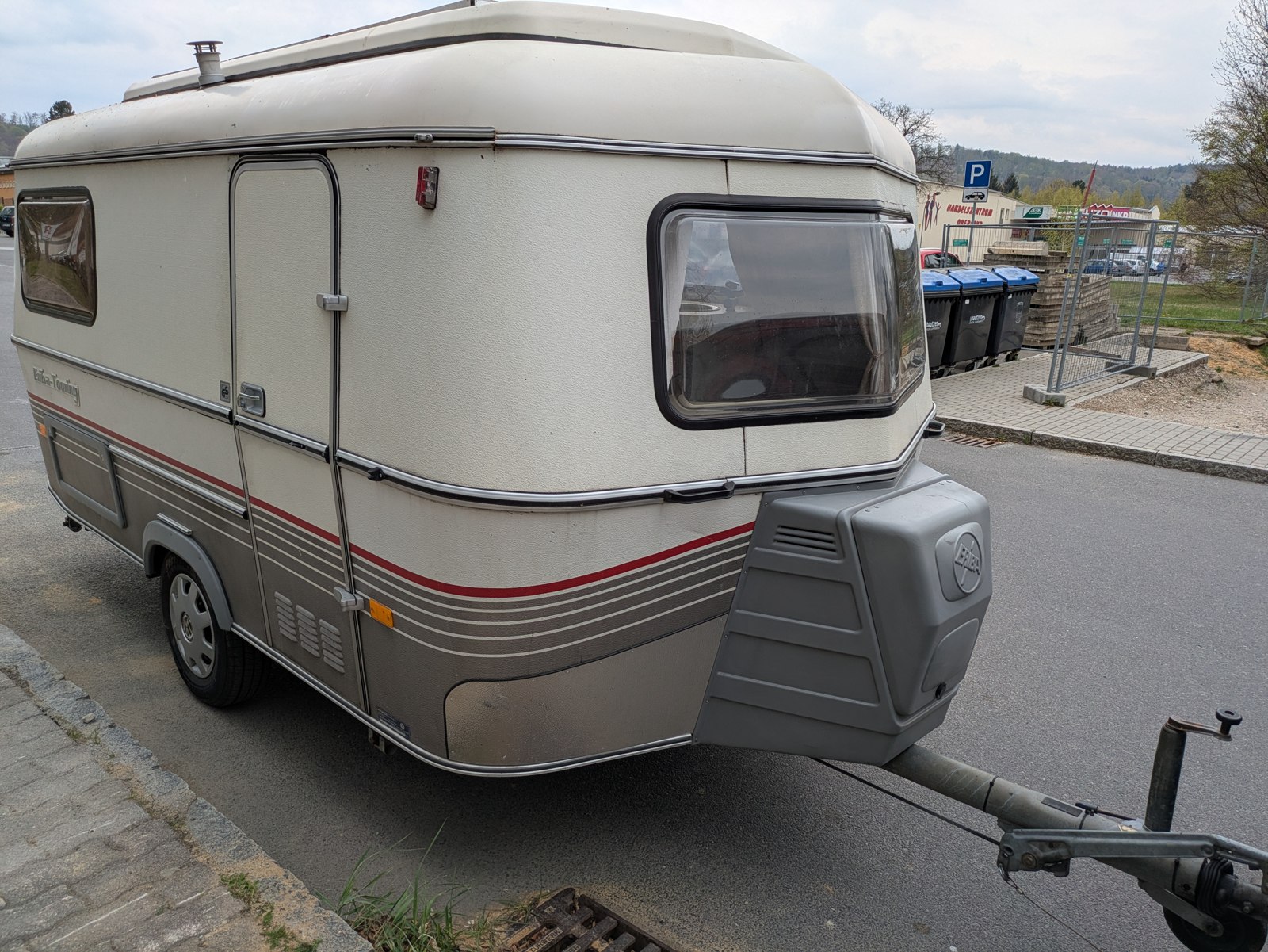
Many caravans cover relatively few kilometres. Their tyres can therefore retain substantial tread several years after manufacture. Check the date and condition together. When buying a used caravan, ask for invoices, repair history and information about storage. A statement that it has hardly travelled does not describe the whole history.
Germany's Tempo 100 arrangement has specific conditions, including tyre age and speed-category requirements. Check the current documentation for your combination and the time elapsed since manufacture. Tyres must be less than six years old for this arrangement. A Tempo 100 sticker on the rear is not proof that every condition continues to be met.
Record the axle arrangement and specification
Write down the complete size, load index, speed rating and other markings. Compare them with the caravan documents. Do not assume that anything sold in a trailer-tyre category automatically fits. The actual product must satisfy the approved application. A seller's category filter is a starting point for a search, not a replacement for those documents.
Single-axle and twin-axle caravans distribute loading differently. Movers, air conditioning and extra equipment may leave less payload than expected. Weighing the caravan ready to travel helps establish its real situation. Consider the limits of the whole combination too; ordering different tyres cannot correct an overloaded combination.
Consider more than straight-line running
A caravan tyre contributes to the trailer's lateral stability. Price and theoretical tread life should therefore not be the only comparison points. Look for available tests covering the category and size. An advertisement for high load capacity does not establish wet-road behaviour.
Discuss replacement across the set with the workshop. One suspect tyre may justify checking the condition and history of the others. Whether another needs replacement cannot be established from a photograph of the damaged tyre alone. The vehicle requirements and actual inspection findings matter.
Allow time after winter storage
Start with a visual inspection and the confirmed cold pressure for the combination. Look at accessible inner and outer sidewalls, valves and changes in appearance. Ask a workshop to inspect areas that cannot be reached safely. Crawling beneath an inadequately supported caravan is not a substitute for a proper inspection.
The first long trip is a poor occasion to investigate a previously unexplained vibration. Have symptoms assessed beforehand. Keep the new invoice and a photograph of the date marking. Next spring, these make it easier to determine whether an age-related condition is approaching, without relying on memories of the last tyre purchase. Include any spare in the records so that its age is not overlooked simply because it is rarely used.