Why rolling takes energy
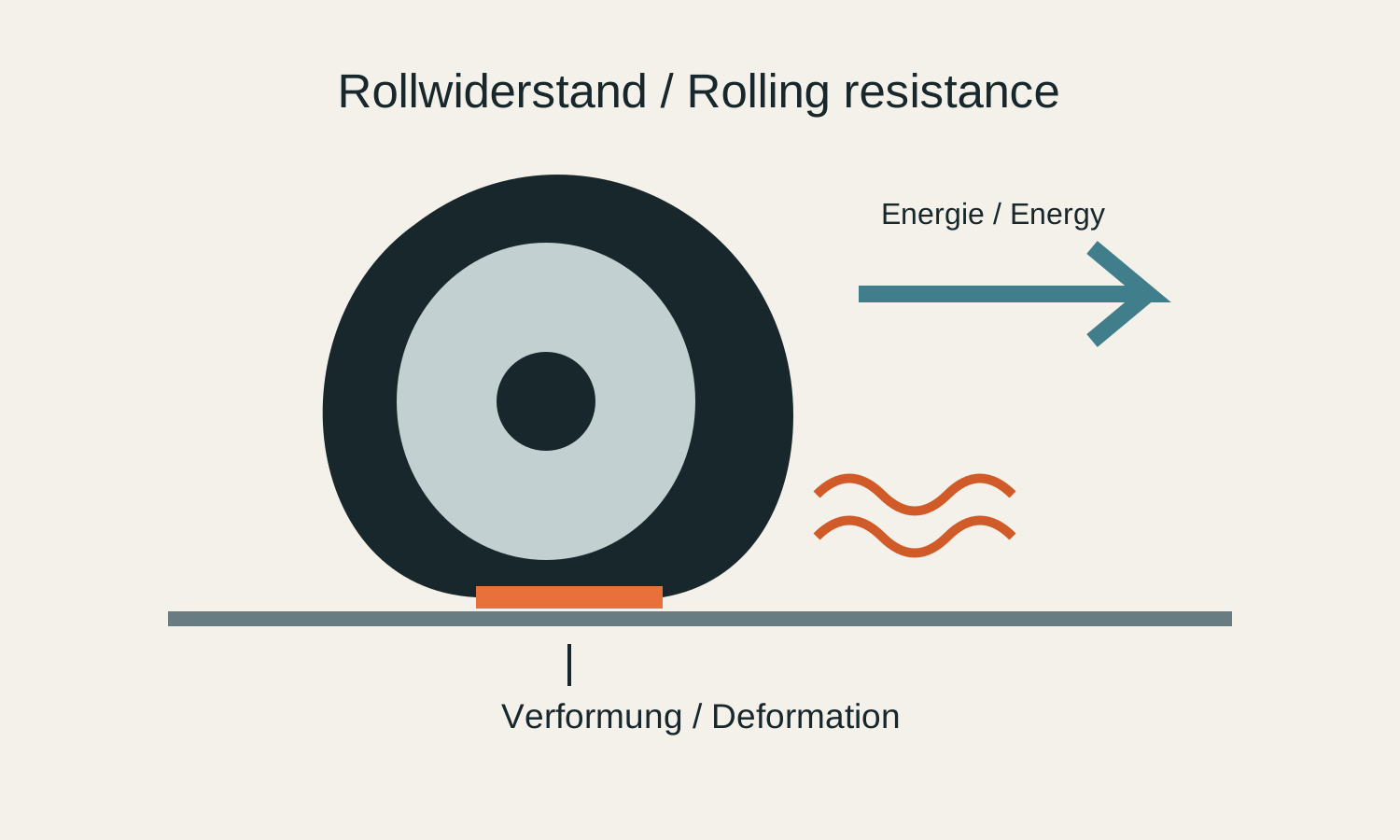
A tyre deforms continuously as it rolls. Energy is dissipated in the process. Rolling resistance describes part of these losses and therefore matters to a vehicle's energy demand. The relevant EU label class provides a way to compare this property. It does not describe the car's complete fuel or electricity consumption.
Aerodynamic resistance, vehicle mass, driving style and route also contribute. A tyre in a better class cannot by itself guarantee a fixed increase in range. Treat the class as one product characteristic within a suitable shortlist, rather than as a personal consumption calculator.
Compare the exact variants
A model name may cover many sizes and versions. Find the data for the required variant and verify its connection to the offer. Listings with different load or OE markings may represent different technical products. Resolve that before doing a price calculation.
Make a small comparison containing purchase price, full specification, rolling-resistance class and relevant wet results. This keeps any trade-offs visible. A favourable class does not make an inadequate load index or missing vehicle approval acceptable.
Build an honest cost estimate
An estimate needs at least annual distance, expected ownership period and a plausible energy price. Any assumed consumption difference should remain clearly identified as an assumption. Calculate several scenarios rather than one apparently exact saving. If a small advantage recovers its extra purchase cost only at very high mileage, that is useful information for a low-mileage driver.
Do not forget the usable life of the complete tyre. Low rolling resistance and high mileage capability are separate properties. Economics also depend on whether you use the set fully while owning the vehicle. Selling the car earlier can shorten a theoretical long-term calculation.
Pressure is not an unrestricted economy control
The prescribed cold pressure is part of correct use. Underinflation is not a sensible comfort adjustment. Equally, do not arbitrarily exceed the instruction in an attempt to reduce resistance. Use the values for your actual combination and load.
When observing consumption after replacement, compare broadly similar routes and conditions. Individual refuelling or charging intervals can vary considerably with weather and use. Record those differences before assigning a change solely to the tyres. A useful personal observation need not be presented as a controlled product test. If the apparent benefit disappears on a different route, retain both observations rather than selecting only the favourable one.