Start before the car moves
The simplest opportunity to check cold tyre pressure is in the morning before driving. Cold does not mean that the weather must be wintry. It means that the tyre has not been heated by driving and is broadly at the surrounding air temperature. A wheel that has been sitting in strong sunshine is therefore not an ideal reference for a cold-pressure comparison.
After a longer journey, tyres need time to cool. Michelin’s general inflation guidance describes at least two hours without use, or only a very short journey at low speed. Follow any additional instructions from your vehicle manufacturer. Measuring where the car is parked avoids having to judge how much the journey to a petrol station has already warmed the tyres.
Find the target before connecting the gauge
Read the pressure placard on the car or the relevant page in its handbook. Check the fitted tyre size, the separate front and rear figures, and the intended load. Photograph the applicable row if you cannot see it while moving around the vehicle. This turns four individual measurements into a straightforward comparison rather than a memory exercise.
The figure moulded into a tyre sidewall is not the vehicle-specific target. Nor is there a universal setting that can be inferred simply from the type of car. Two cars of similar size may have different requirements. Check the units too: a reading in psi cannot be compared directly with a placard value in bar without converting it correctly.
Take a settled reading at each wheel
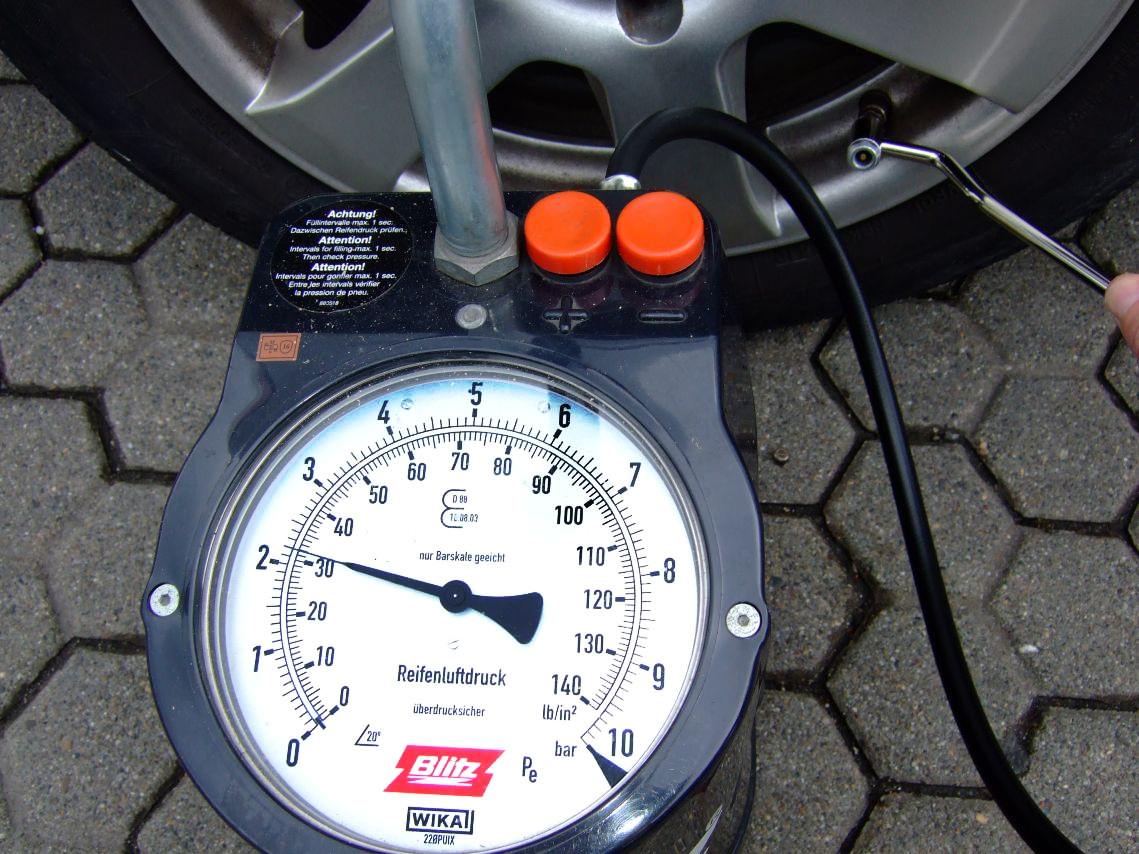
Remove the valve cap and place the gauge connector squarely over the valve. A brief hiss while connecting can occur; continued escaping air means that the connection is not yet sealed. Read the display only once the connector is seated properly. Record the initial figure before adding air or adjusting the cold pressure to the vehicle’s specified value.
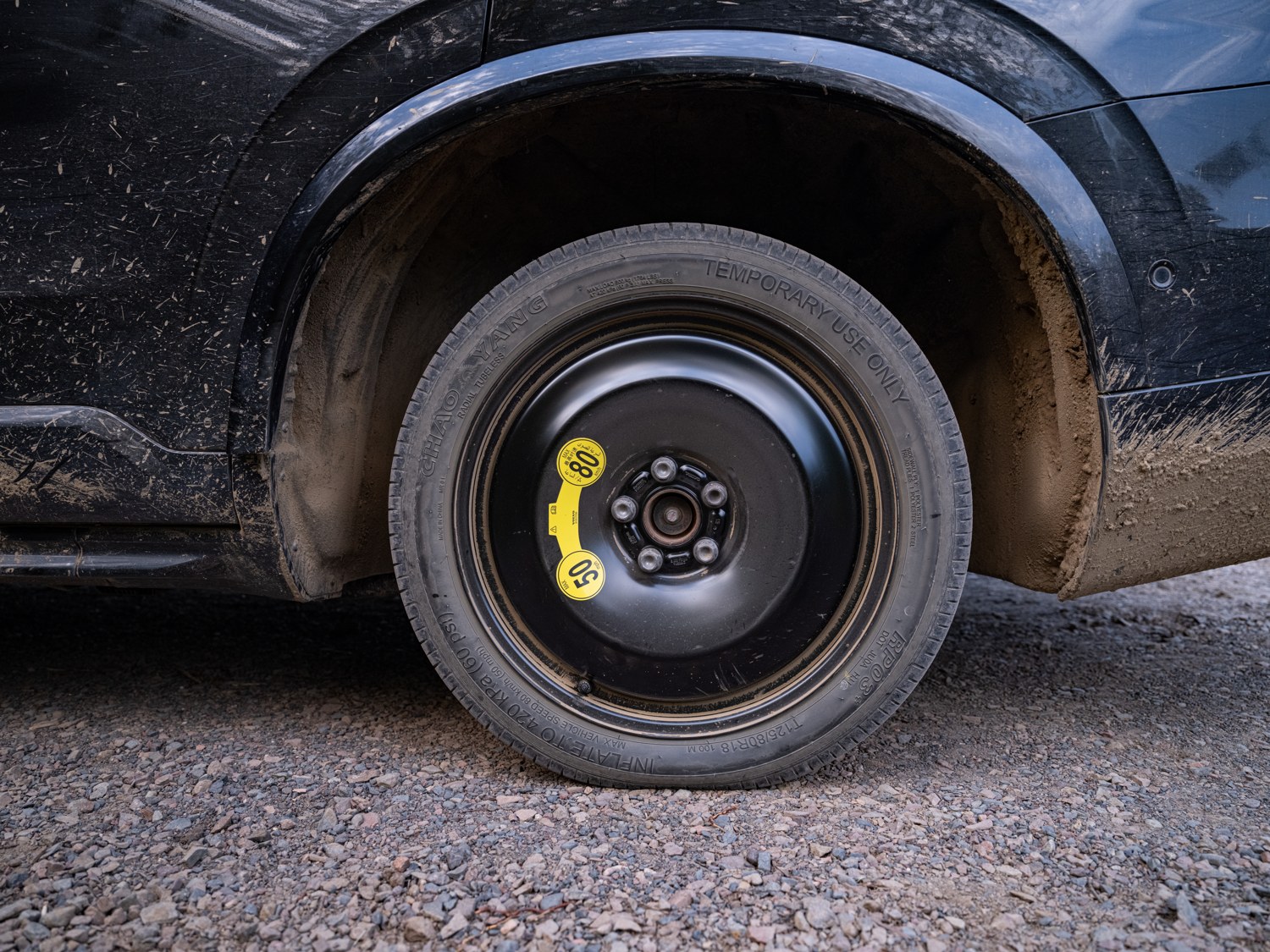
Work around the car in a consistent order and check all four tyres. A second reading after adjustment helps catch a connection or operating error. Replace the valve caps afterwards. An inflatable spare also needs regular checks, although it may have its own pressure requirement. Do not assume that the normal road-wheel figure applies to it.
When a difference needs more attention
If the tyres are already warm, do not release air just to reach the printed cold-pressure figure. Check again in suitable conditions. One tyre that repeatedly loses pressure between comparable measurements needs investigation for a leak. Adding air may restore a reading, but it does not explain where the air went.
A visibly flat tyre, a sidewall bulge or a clear change in vehicle behaviour calls for more than an ordinary pressure check. Do not continue driving; arrange a safe solution with roadside assistance or a tyre professional. A tyre-pressure monitoring system helps with supervision but does not replace regular measurements.