Outside should face outwards
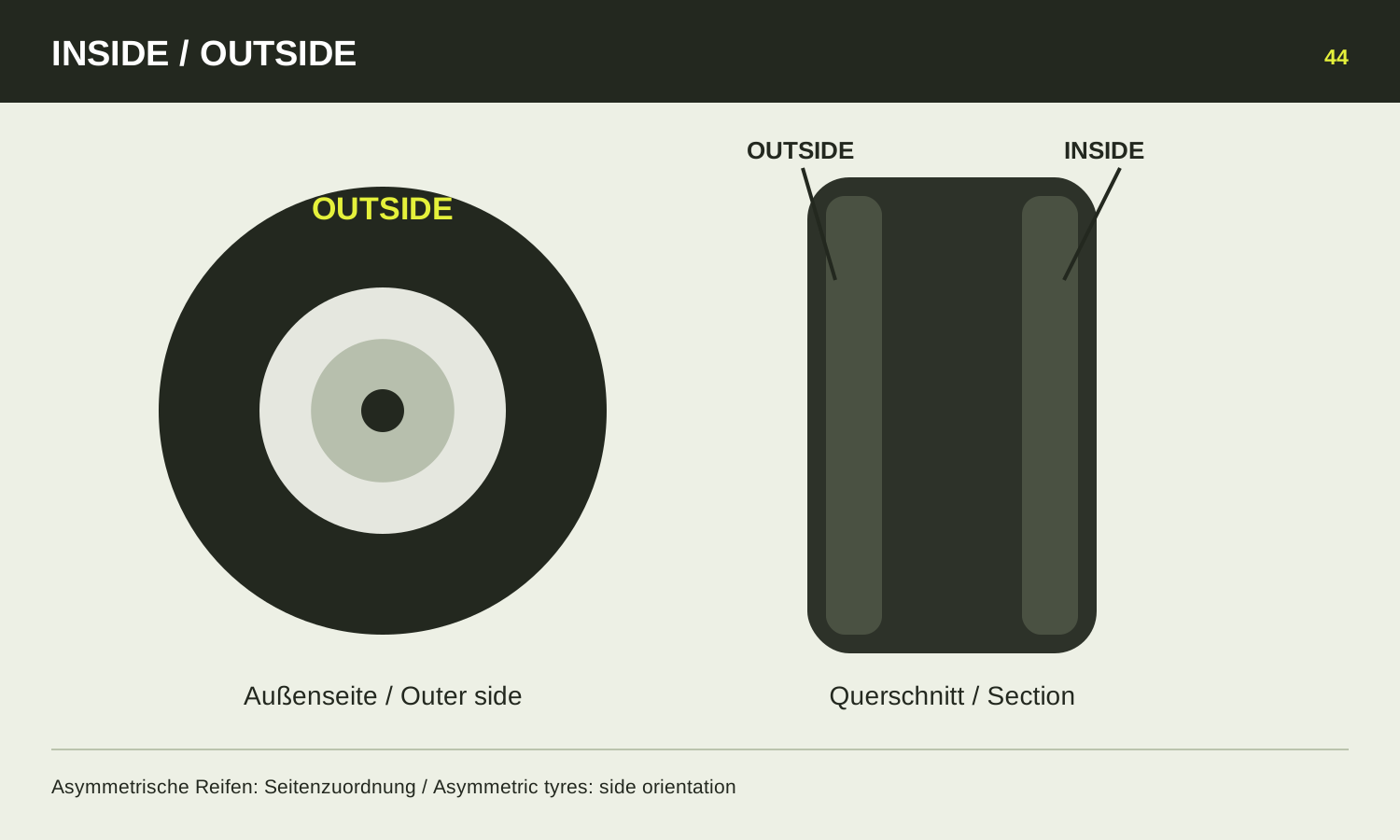
An asymmetric tyre has differently designed tread areas. Inside and Outside identify the intended inner and outer sidewalls. Correct fitting places the sidewall marked Outside towards the exterior of the vehicle. This concerns how the tyre is mounted on the wheel, rather than simply choosing either side of the car.
The two areas serve the tyre's intended overall function. Do not infer orientation from a personal impression of how water ought to flow. The manufacturer's marking is the reference even when the tread appears unusual on opposite sides.
Asymmetric does not automatically mean directional
Inside-Outside instructions differ from a Rotation arrow. Confusion can arise because the tread does not appear mirror-imaged across the car. On an asymmetric non-directional tyre, that alone does not prove incorrect fitting. Read the actual markings.
Any additional rotation or positional instructions must also be observed. Have the workshop identify unclear markings through the manufacturer's information for the complete version. A generic diagram showing another model is insufficient.
Check during fitting and replacement
After fitting, the visible Outside marking is a useful check. It does not replace assessment of pressure, fastening or overall suitability. If Inside is visible externally, query the fitting with the workshop.
Correction may require professional remounting. Simply moving an incorrectly mounted tyre to the opposite side does not generally resolve its orientation. Let the fitter establish the correct procedure.
Keep information for later work
Record model and version, particularly when several similar sets are stored. A storage position mark records where the wheel was previously fitted; it does not automatically establish correct tyre orientation. Keep these two meanings separate.
Single-tyre replacement also requires suitable dimensions, load and speed versions and compatibility with the remaining set. Correct outward orientation is necessary but not a complete purchasing decision. Clear identification and professional fitting still belong together. Ask for any changed wheel positions to be explained so that future storage labels remain useful rather than perpetuating an old mistake.