The two reference planes
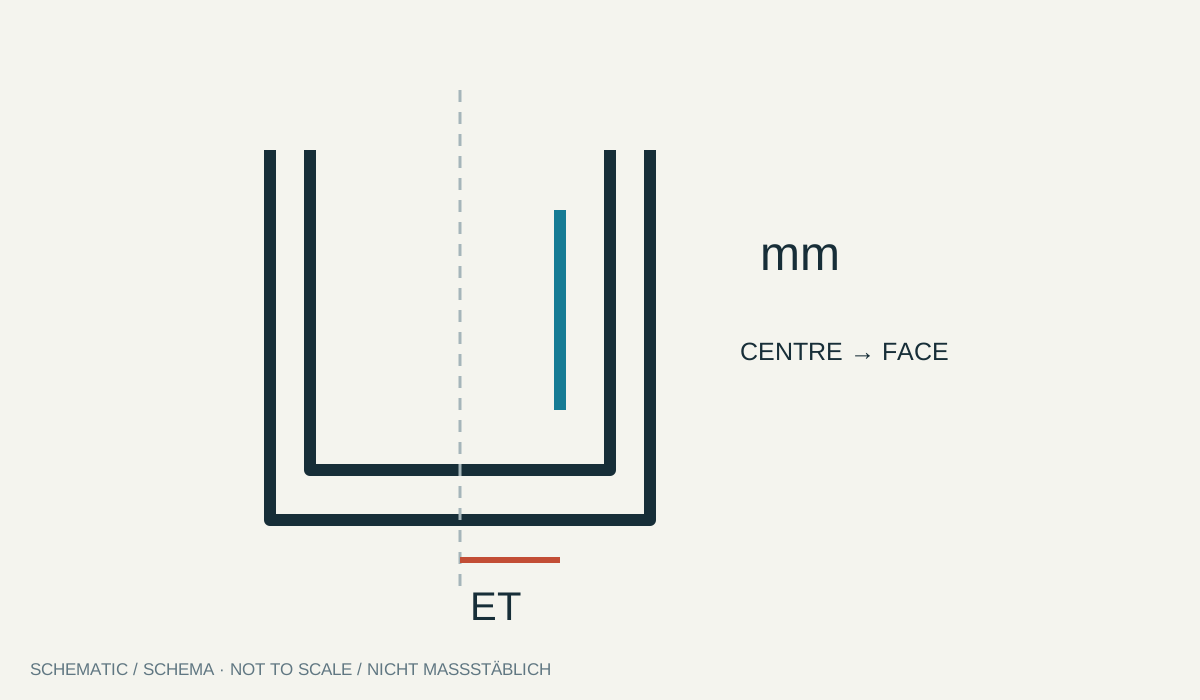
Wheel offset is the distance between the wheel centre plane and its mounting face at the hub. It is expressed in millimetres, often with ET before the number. A cross-section makes the relationship easier to follow: the centreline is an imaginary plane between the wheel's sides, while the mounting face is the physical surface that meets the vehicle.
With positive offset, the mounting face is displaced towards the outside face of the wheel. Increasing positive offset on a wheel of the same width places the wheel further inboard on the car. Reducing it places the wheel further outboard. That description assumes the remaining geometry stays the same. If width changes too, the offset difference alone no longer describes the result.
An example with width held constant
Imagine two otherwise identical wheels marked ET45 and ET35. The difference is ten millimetres. At the same width, the ET35 wheel sits ten millimetres further outboard than the ET45 wheel. This is a geometric explanation, not a recommendation to make that change on a particular car. Approval and adequate clearance remain separate questions.
If the wheel is also widened, the additional width extends inward and outward around the same centreline. Offset then locates that centreline relative to the hub. This explains why wheels with identical offsets need not have identical inner clearance. A comparison note should include at least width and offset; either number on its own can be misleading.
Visible position is not a complete assessment
A wheel that appears flush with the body has not thereby been assessed as a complete fitment. Brakes, suspension, steering movement and actual tyre shape all matter. Suspension changes may introduce further interactions. A static photograph in a car park cannot establish the clearance available in all relevant operating conditions.
Spacers also alter the effective position and need their own suitable assessment within the complete combination. They are not an automatic correction for a wheel bought in an unsuitable version. Longer fasteners alone do not establish load capacity, clearance or approval either. Plans involving several changed components should be discussed with a qualified organisation before ordering.
Take the offset from the actual identification
Find the value on the wheel and in its corresponding documents. A similar design can be supplied in several offsets. A product photograph, or a picture of the wheel on another car, is therefore insufficient. Part number, version and offset need to refer to the same component.
When having an alternative assessed, supply the complete existing and proposed wheel-and-tyre combinations. Include relevant vehicle modifications. That allows an answer about the actual change rather than one isolated number. An offset calculation is useful for understanding and comparison, but it is not a vehicle-specific approval.