Before the wet section
Check tyres routinely rather than waiting for a severe-weather warning. Remaining tread, appropriate pressure and visible damage belong together. A new tyre with a good wet rating does not guarantee safe passage through every accumulation of water. Conversely, an older set may have much less reserve than before even though grooves remain visible.
For a longer wet-weather journey, review the route and current conditions. Heavy rain can affect visibility and the road simultaneously. Depressions and wheel ruts deserve particular attention. A flooded section or water of unknown depth should not be treated as an ordinary test of tyre ability.
Distinguish wet grip from aquaplaning
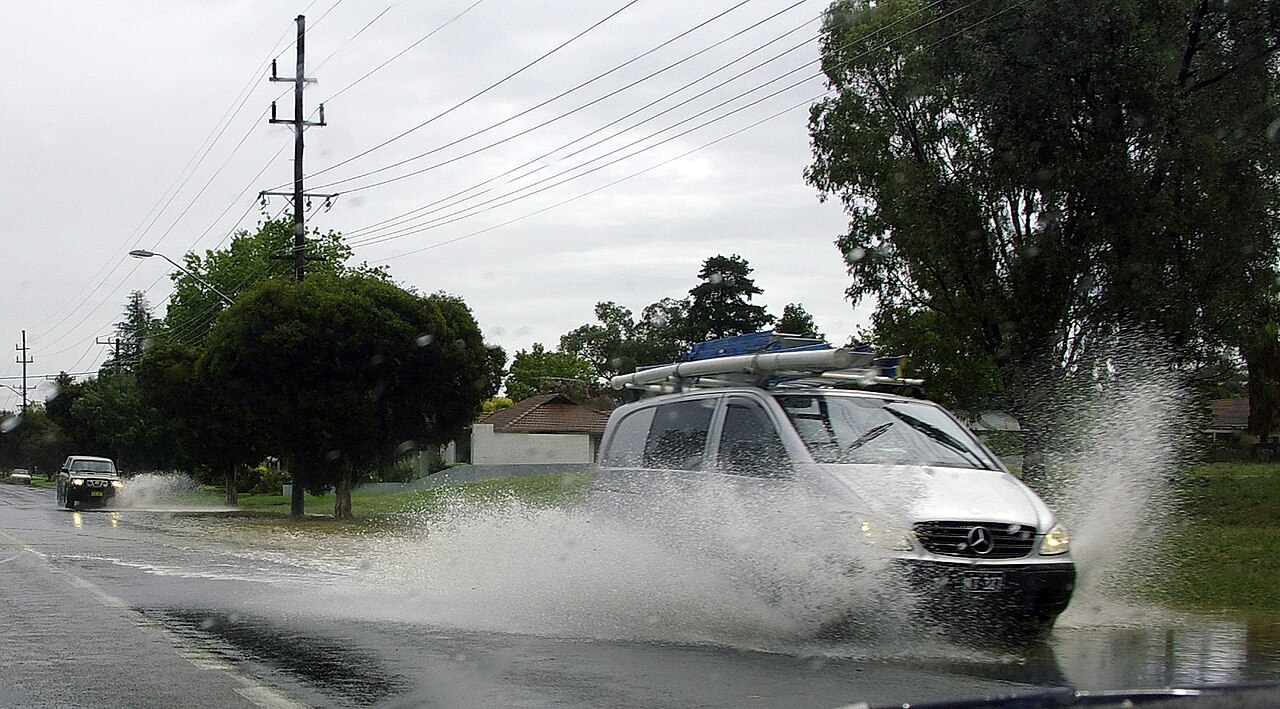
Wet grip does not describe every aspect of behaviour in deep water. During aquaplaning, water can separate the tyre from the road and substantially reduce contact. Speed, water depth, tyre characteristics and surface condition interact. There is consequently no universal safe speed for every car and puddle.
A tyre label or one braking result cannot fully answer that question either. Check which discipline a test actually measured. A statement about braking on a wet surface should not become a promise about standing water. Understanding the limits of the information is part of choosing tyres.
Take changes seriously
If steering feel changes, the car behaves unusually or a warning appears, avoid abrupt inputs and resolve the situation safely. General advice does not replace the vehicle handbook or driver training. Do not deliberately repeat a suspected loss of grip to confirm it.
A forceful encounter with water or a hidden pothole can cause damage that is not immediately obvious. Have new vibration or pressure loss investigated. A stop in a safe place may allow a visual check, but that does not fully assess the tyre's inside or structural condition.
Use the experience when buying next time
Describe your usual use precisely. Frequent motorway rain, short urban journeys and occasional seasonal use place different emphasis on performance. Compare models in a relevant size and examine several applicable test disciplines. The lowest price should not be the only information available.
Maintain a plan for checks during ownership as well. A set that initially suited the car changes through wear and possible damage. Record unusual observations instead of relying solely on its original test result. Rain can make such changes more noticeable, but it does not automatically explain every fault noticed during wet weather. A workshop needs the observations and their timing to investigate rather than an assumption that the tyres are simply bad in rain.