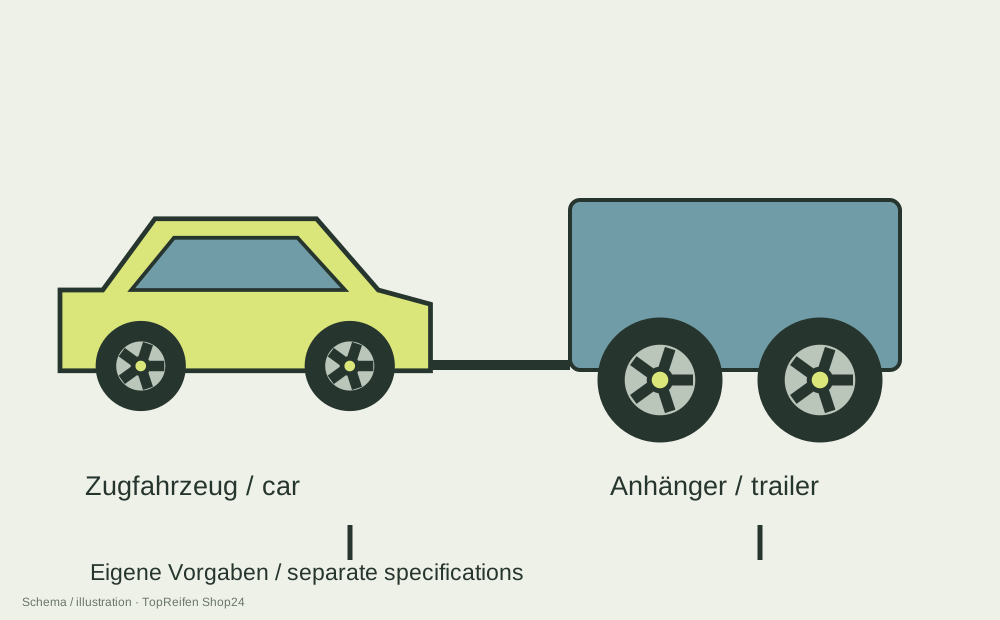
Two vehicles, two sets of instructions
Trailer tyres have their own requirements. Do not copy size, capacity or pressure from the towing car. Find the information for the particular trailer and establish whether the fitted tyres match it. On a used trailer, previous installation does not prove that the specification is correct.
Towing can also change the load on the car. Follow the associated vehicle instructions, including permitted loads. Increasing pressure cannot compensate for excess weight or an unsuitable combination. Resolve uncertain specifications before travelling.
Standing still can hide problems
A trailer may cover few miles while its tyres develop deterioration or damage. Look for cracking, bulges, unusual distortion and uneven wear. Include a spare wheel if one is carried. Deep-looking tread alone does not answer the condition question.
Check pressure before loading or under the specified cold conditions. If a wheel repeatedly loses air, investigate the cause. A rarely used trailer should not reveal a leaking valve or tyre for the first time on a motorway. After a long period off the road, allow enough time for professional inspection where needed.
Loading and special permissions
Permitted total mass, axle load and nose weight must remain within the applicable limits. Distribute and restrain the load in accordance with the instructions. One tyre marking does not replace assessment of the whole towing combination. If relying on a special speed approval, check its particular conditions, including any tyre requirements.
Avoid assuming that every trailer fitted with new tyres automatically qualifies for a particular speed. Such permissions concern the complete combination and the applicable rules. The relevant evidence should exist and match the vehicles actually being used.
Think through a puncture in advance
Establish what assistance covers the car and trailer and what information the provider will require. A spare is useful only if it fits, is serviceable and can be installed safely. Changing a wheel yourself on a dangerous stopping surface is not an obligation. Protecting people comes before attempting to continue the journey quickly.
After the trip, record unusual observations such as recurring pressure differences or a suspicious tyre. If the trailer then stands unused for months, those details are easily forgotten. The next inspection can begin with a specific point to investigate instead of assuming that everything remains as it was. Keep the trailer's tyre details with its documents so that a replacement enquiry does not depend on an incomplete photograph taken at the roadside.