Deal with the driving situation before the menu
If a pressure warning appears while driving, concentrate on controlling the vehicle safely. Avoid abrupt steering or braking and find a suitable safe stopping place. Do not work through complicated menus while the car may already be handling differently. A clear change in behaviour or an apparent tyre failure means the journey must stop.
At a hazardous location, protecting occupants takes priority over examining a wheel beside moving traffic. Follow local rules and roadside-assistance advice. Taking a pressure reading on a busy road shoulder is not an obligation when the act of checking creates a further risk.
Read the message alongside the physical condition
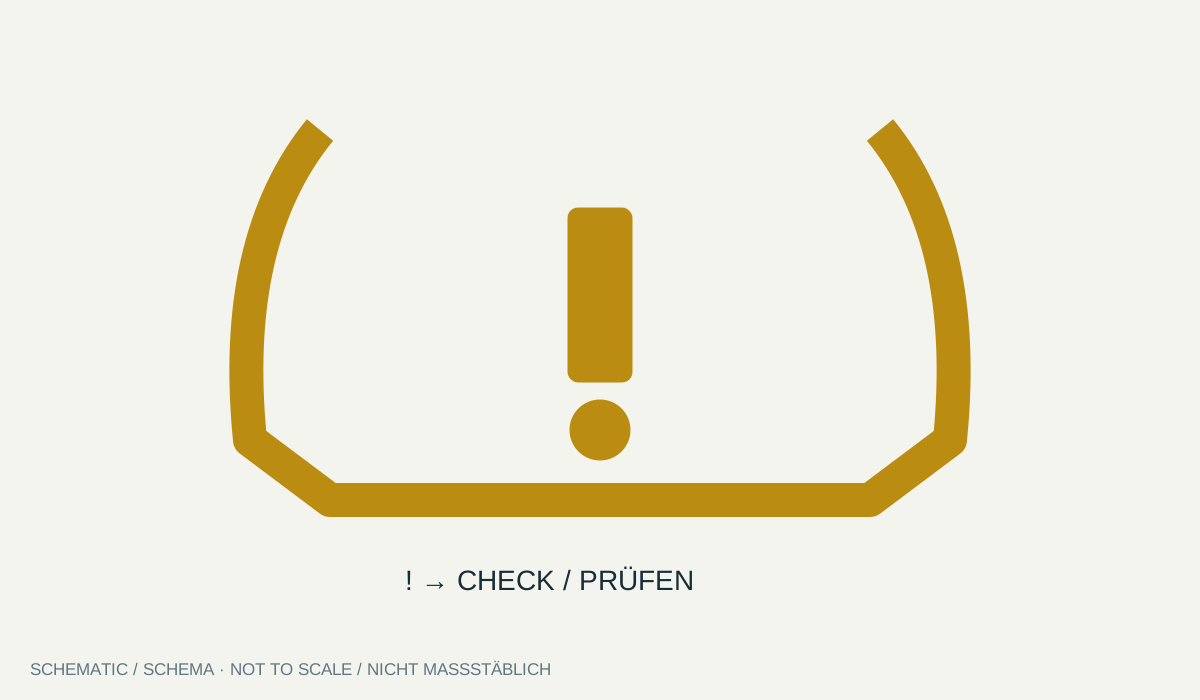
Once stopped, read the message and consult its meaning in the handbook. A low-pressure alert and a monitoring-system fault are not the same thing. Some displays identify a wheel, while others show only a general symbol. Record or photograph the exact wording before it disappears.
Where it is safe to do so, inspect the visible condition of all tyres. A flat tyre, bulge or major damage is not a case for simply clearing the display. Do not continue driving; arrange assistance and an appropriate repair or replacement solution. A tyre that looks normal can still be underinflated, so appearance alone is not enough.
Measure rather than guess
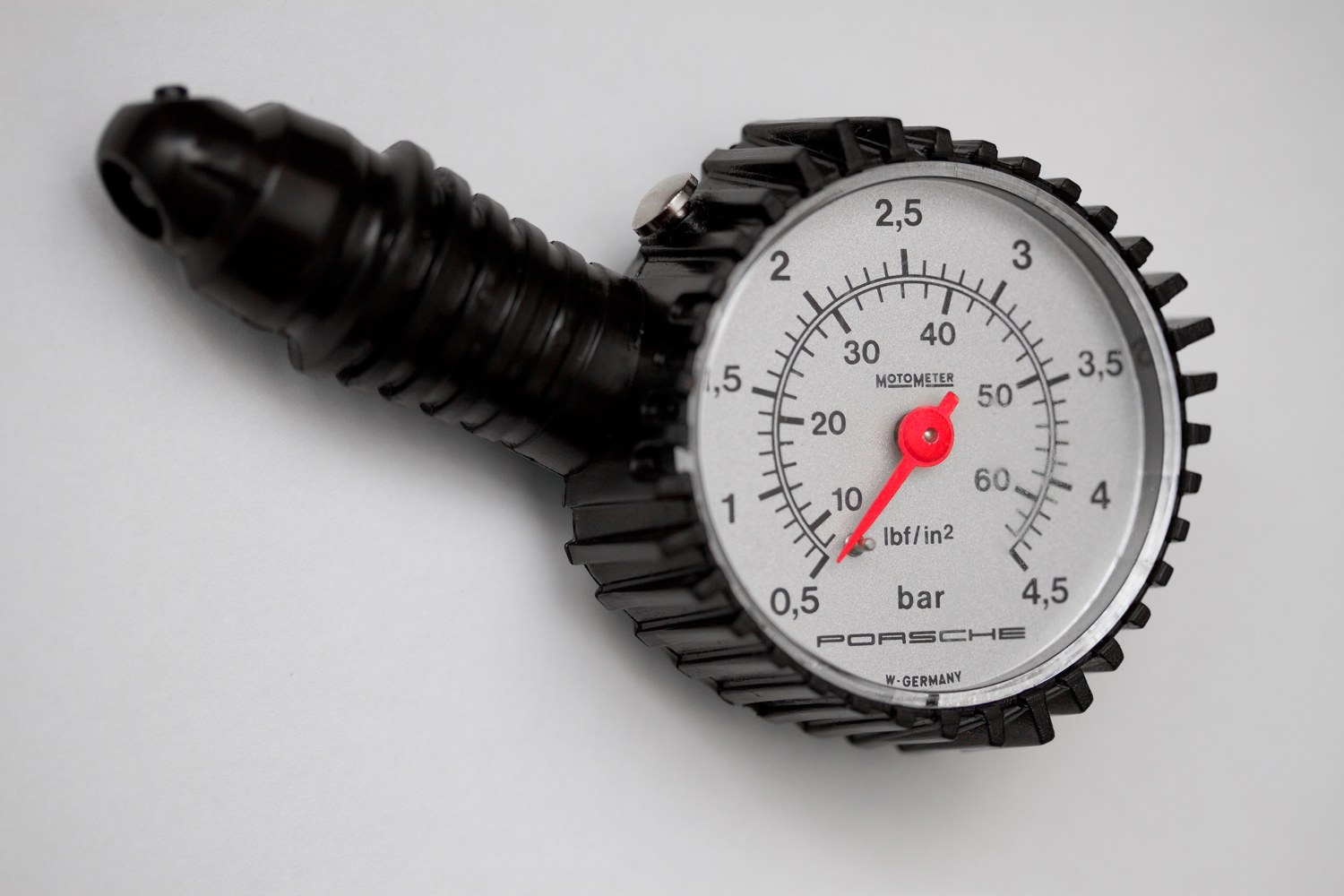
A dependable gauge establishes the actual pressures. Compare them with the vehicle instructions while accounting for tyres warmed by driving. Do not release air from warm tyres to reach the cold target. An unusually large loss or repeated decline requires professional investigation rather than repeated topping-up.
Do not pull out an embedded object as a test. Tell the workshop when the warning began, whether handling changed and whether air has already been added. These details help separate a genuine leak from incorrect setup or an electronic problem.
Only then address the monitoring system
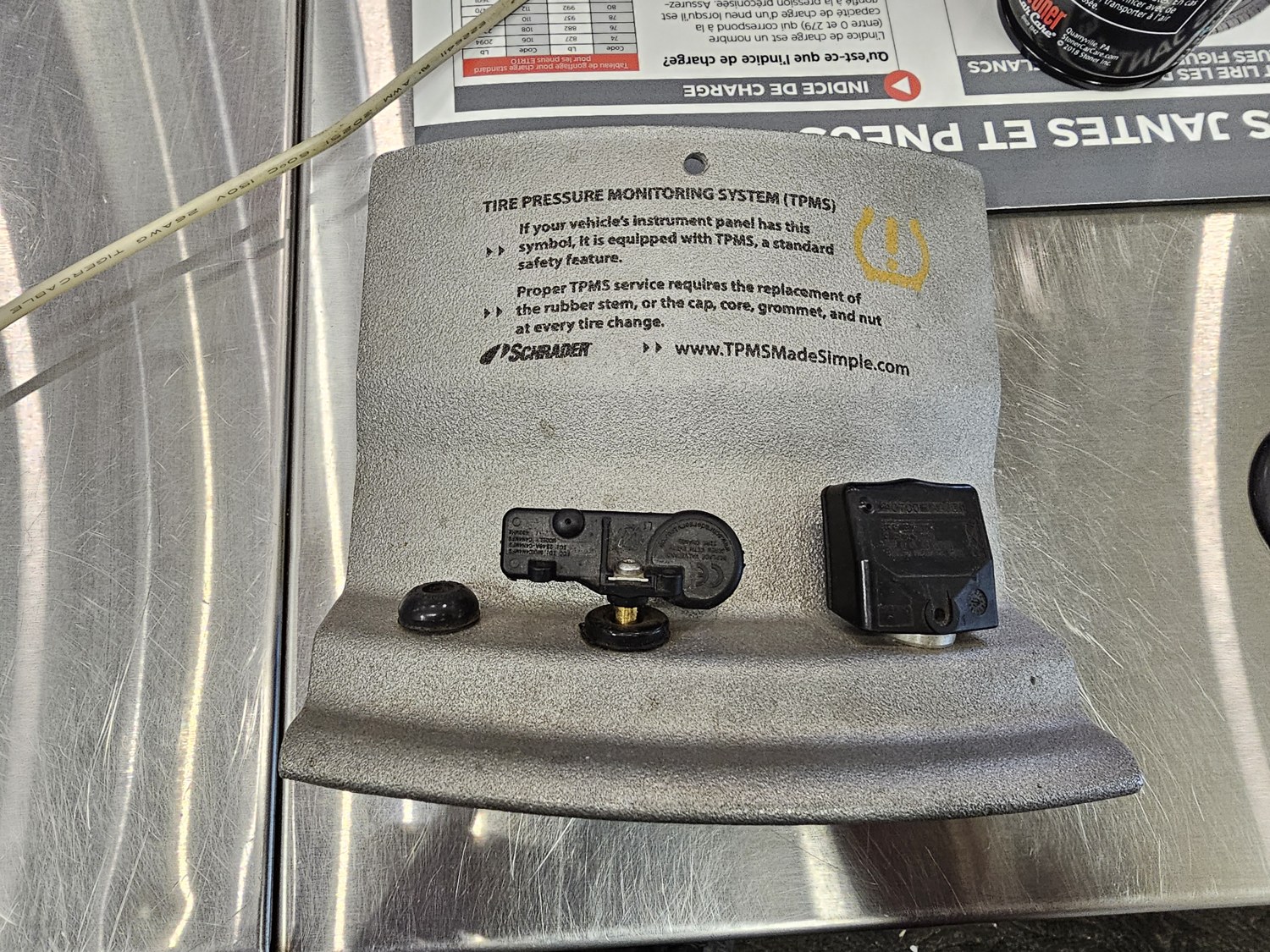
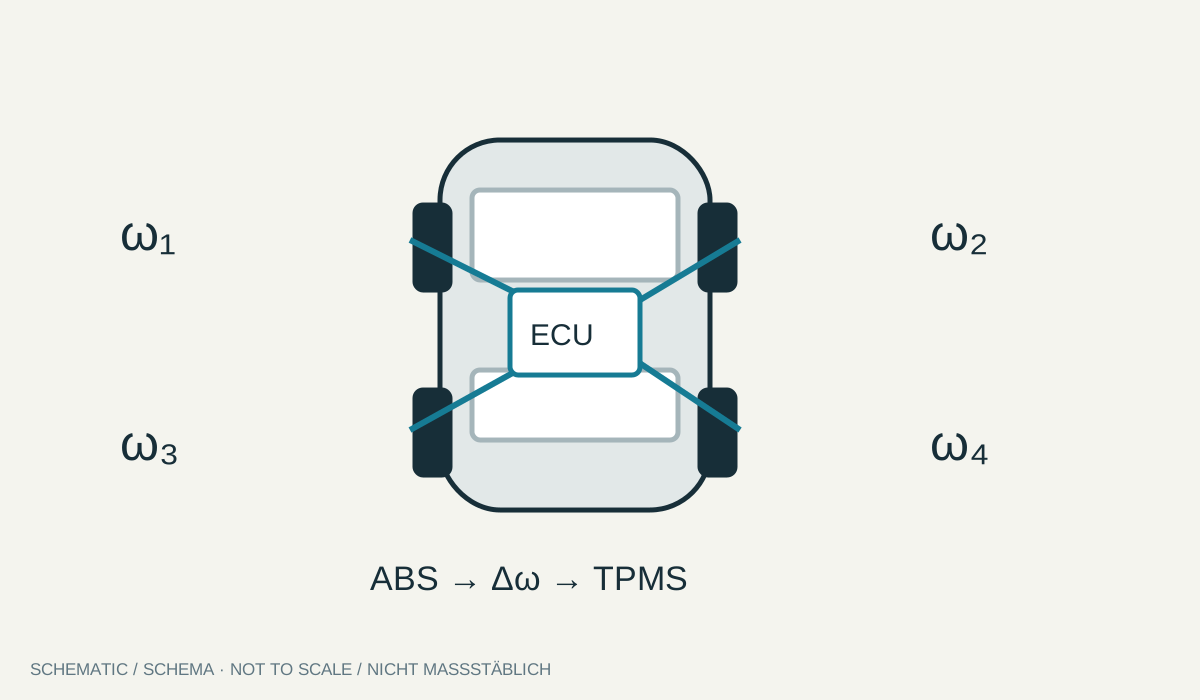
After tyre condition has been established and correct inflation confirmed, the vehicle may need initialisation. Follow the appropriate handbook procedure. A direct system may require different steps from an indirect one. Successfully acknowledging a message says nothing about concealed damage.
If the warning remains despite correct pressures or returns afterwards, arrange diagnosis. Ask what was found, not merely whether the light is now off. A recurring warning after a seasonal wheel change may concern sensor recognition, but must not be attributed to that without checking the tyres.