Describe the timing accurately
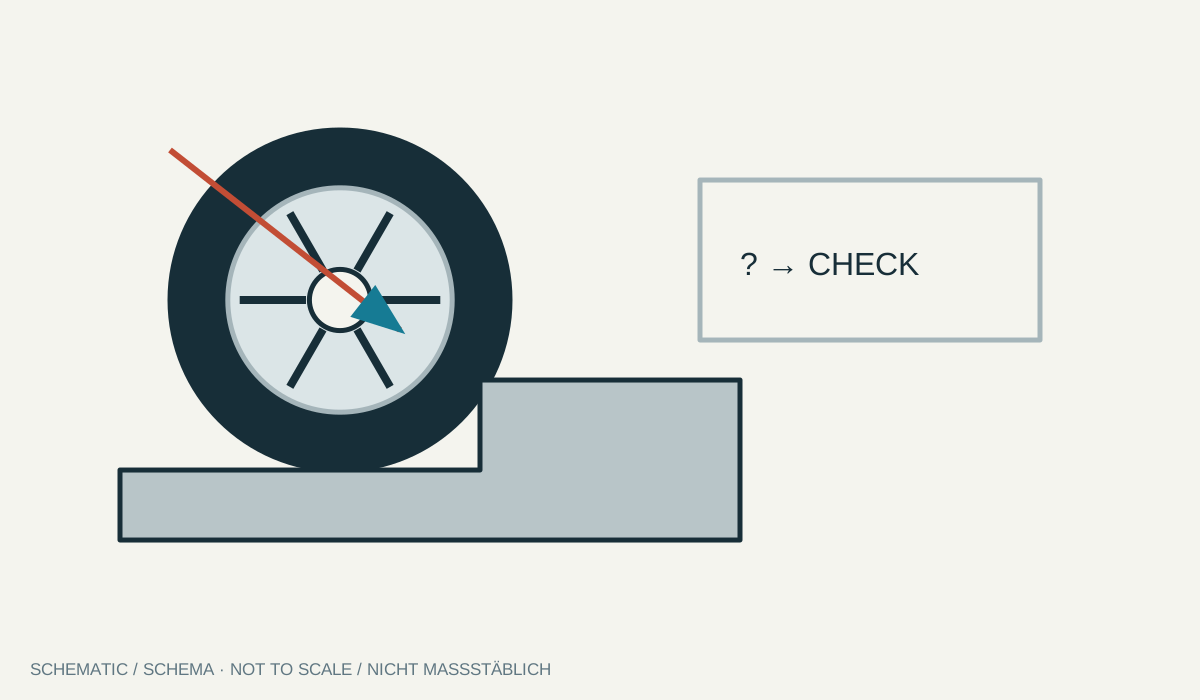
If vibration begins after a wheel or tyre change, that timing matters. It does not yet prove which component is responsible. Note whether it began immediately after collection, which ordinary driving conditions reveal it, and whether it is felt in the steering wheel, seat or whole vehicle. Do not provoke additional high-speed tests.
Strong shaking, rattling, unusual steering effects or suspected loose fastening call for a safe stop without further driving. The fitting business or roadside assistance should establish the next safe step. Simply driving farther is not a substitute for checking a potentially safety-critical condition.
Establish what work was performed
A complete set may only have been swapped, whereas tyre replacement involves removing rubber from the rim and refitting it. This distinction helps narrow the possibilities. Mention new centring rings, different bolts, changed wheels or sensor work. The invoice can establish the scope.
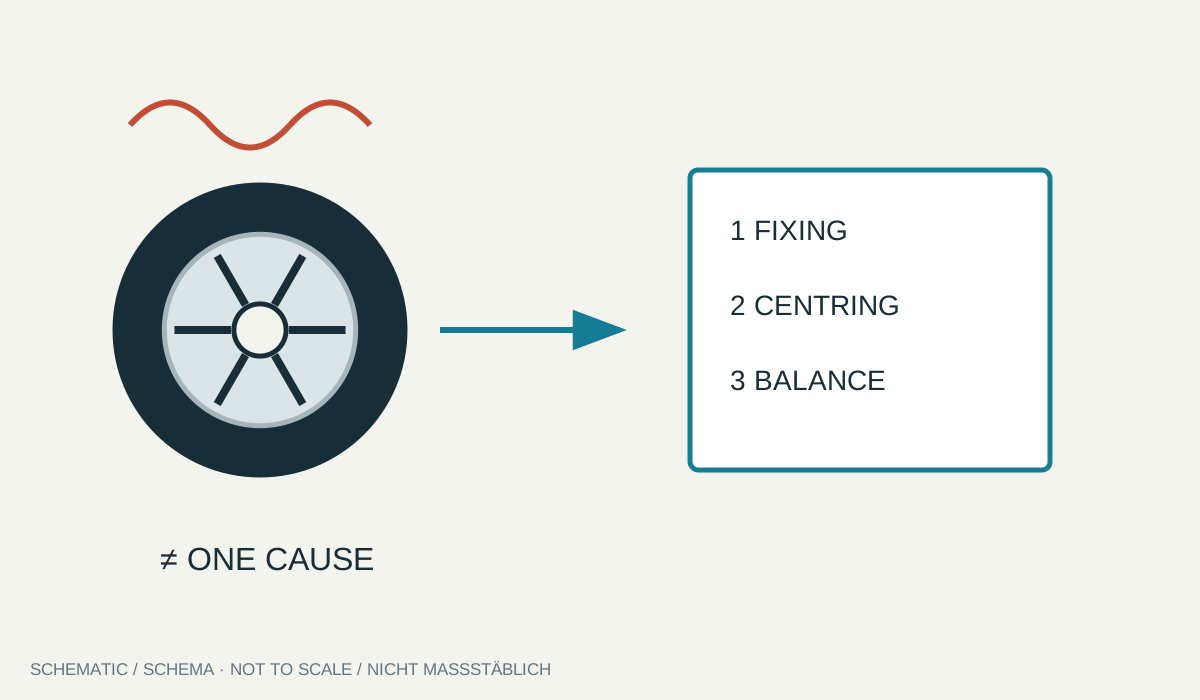
An existing wear pattern may become more noticeable in another wheel position. Fitting, centring or balance issues are also possible. Wheel distortion or tyre damage requires a different remedy again. The workshop needs to examine the assembly rather than prescribe one operation from the word vibration alone.
Balancing and alignment are different
Balancing assesses the mass distribution of the rotating wheel and corrects it with suitable weights where appropriate. Alignment concerns the geometric orientation of wheels on the vehicle. A balanced wheel can still be incorrectly aligned; correct alignment cannot remove an imbalance.
Ask what was found and how the proposed work addresses it. Repeated fitting without explanation may alter the symptom but makes the process difficult to follow. Missing or misplaced weights must also be confirmed rather than diagnosed with certainty from driving feel alone.
After the correction
Have the fitment, fasteners and pressures checked against the applicable instructions. Any required fastening recheck should follow the manufacturer’s procedure. Do not guess a torque value or attempt to cure vibration by tightening harder.
The reported disturbance should no longer occur during normal use. If it returns, report the date and conditions accurately. Driving away from the workshop does not demonstrate performance in every later situation. Clear observations help further diagnosis without risky experiments.