Begin with a suitable gauge
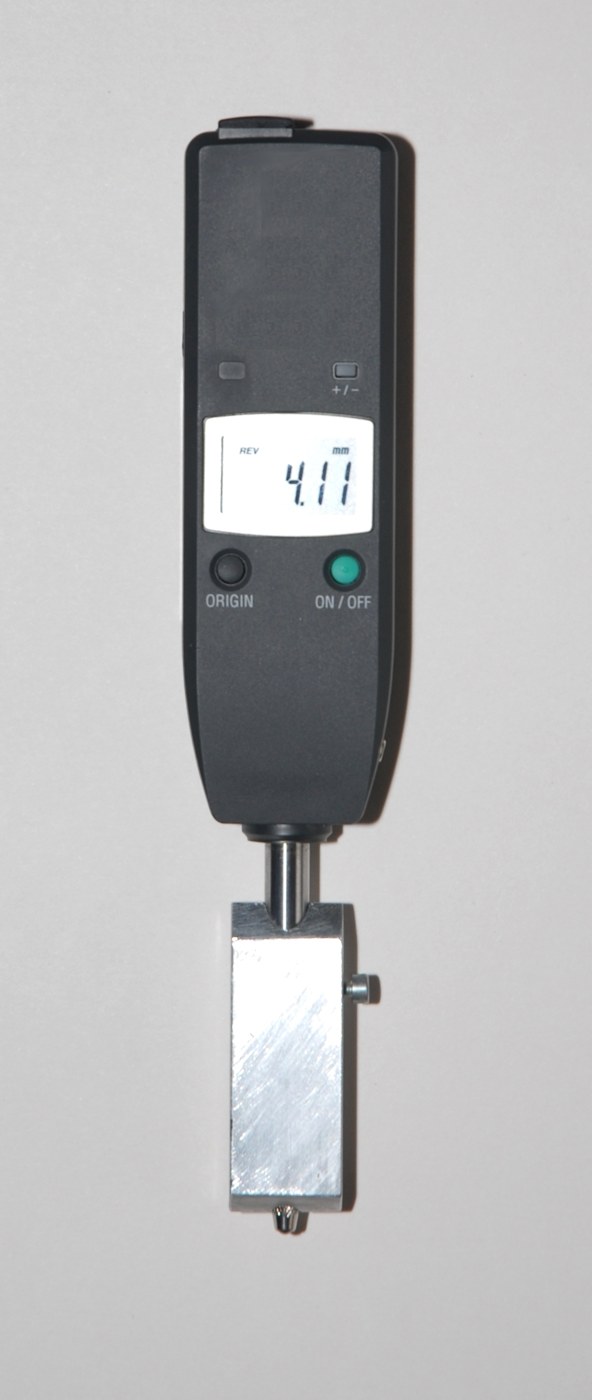
A tread-depth gauge turns remaining groove depth into a readable number. Check that its probe moves freely and that it is zeroed as instructed. Dirt or a stone in the groove can distort the result. Remove loose debris carefully without extracting an object embedded in the tyre.
Measure with the car safely parked. Reposition the vehicle in a controlled way to reach another area; never have it moved during a measurement. Do not reach beneath an inadequately supported car. If the inner side cannot be accessed safely, a workshop can complete the inspection with suitable lifting equipment.
Use several grooves and circumferential positions
Rest the gauge’s base on the tread surface and place its probe into a suitable main groove. Do not measure on a raised wear indicator within that groove. Repeat at several points around the tyre and across its width. One reassuring centre reading says little about a badly worn inner shoulder.
Record results by wheel and position, for example inner, centre and outer. The lowest relevant value matters more than a comforting average. If one side is much more worn, document the pattern and have its cause investigated. New tyres alone do not correct an underlying suspension fault.
Separate the legal limit from replacement planning
For ordinary passenger-car tyres in Germany, section 36 of the StVZO requires at least 1.6 millimetres in the main tread around the full circumference. The main tread comprises the broad grooves in the central area, approximately three quarters of the tread width. This legal minimum does not promise unchanged performance down to the final permissible millimetre.
Use, season and the distance you plan to cover also matter to replacement timing. Water-handling capability changes as tread wears. Recommendations from technical organisations may therefore exceed the legal minimum. Identify recommendations as such, rather than treating them as the same kind of information as another country’s legal requirement.
Depth is only one part of tyre condition
A tyre with deep grooves can still be unusable because of a bulge, cracking, an embedded object or internal damage. Add a visual inspection to the measurements. Photograph anything unusual and obtain an assessment. Exposed structural material or structural damage is not a reason to wait until the next routine seasonal change.
Keep the readings with the date and mileage. The next check can show whether wear is progressing evenly. Update the record if wheels change position; otherwise wear may appear to jump from one location to another. A simple, accurately labelled record is more useful than numerous unidentified photographs.